



CLICK TO SUBSCRIBE TO OUR FREE MARRIAGE ENCOURAGEMENT PODCAST!
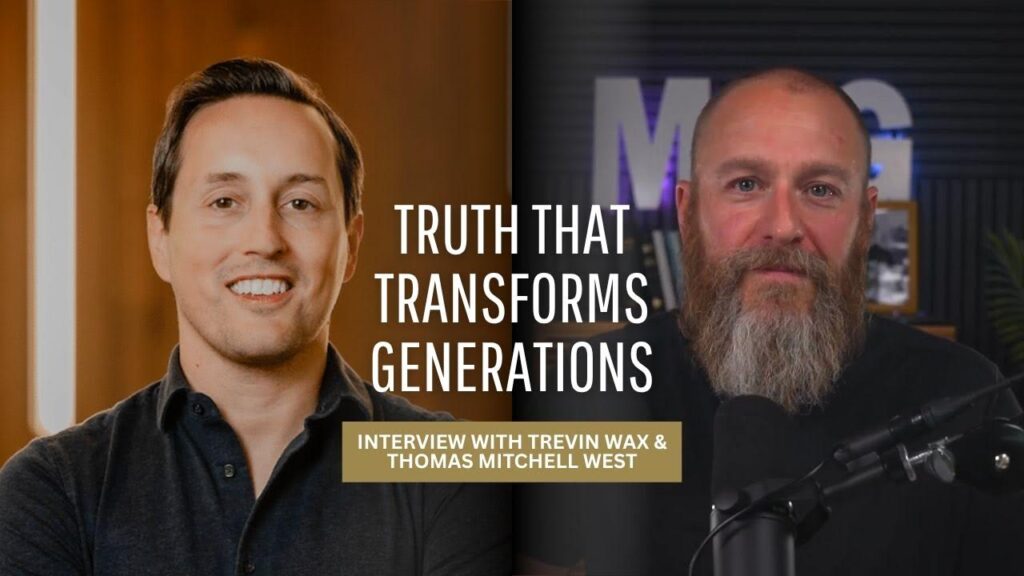
This week, Aaron sat down with Thomas West and Trevin Wax, authors of The Gospel Way Catechism. Both of these men have spent years in ministry—Trevin as a missionary in Romania and Thomas as a pastor and former church planter in London. Each has seen firsthand how cultural narratives shape people’s understanding of truth, identity, and even faith itself.
In this conversation, we explored how their new book serves as a counter-catechism—a tool to help Christians retrain their hearts and minds in the truth of God’s Word.
What Is a Catechism, and Why Does It Matter?
Trevin explained, “A catechism is simply a question-and-answer format for discipleship. It’s an ancient, simple tool the Church has used for centuries to teach the faith.”
But the “counter” part is what makes this project stand out. As he shared, “We wanted to show how the truths of Scripture directly counter the cultural narratives that dominate our world. It’s not about railing against culture, but inviting people to see that God’s way is better.”
That resonated deeply with me. We’re living in a world obsessed with expressive individualism—the idea that truth and purpose come from looking within ourselves. Yet the Bible teaches the opposite: “It is the Lord who made us, and we are His” (Psalm 100:3).
Freedom in Christ doesn’t mean doing whatever we want—it means being free for something: to love, to serve, and to walk in righteousness. As Paul wrote, “All things are lawful, but I will not be mastered by any” (1 Corinthians 6:12).
Reclaiming the Stories That Shape Us
Thomas shared how this book was born out of his time in London. “Everywhere you look—the Tube ads, the billboards—there are stories about what the ‘good life’ looks like. I realized the Church needs to equip people to recognize and respond to those stories with the gospel.”
That’s the heartbeat of their catechism: connect, confront, and convert.
- Connect with the cultural stories people are already hearing.
- Confront them gently with the truth of Scripture.
- Convert hearts and minds to the way of Christ.
Trevin reminded us, “We’re all being catechized—by media, by entertainment, by the messages of the world. The question is: what script are we living by?”
Discipleship Starts at Home
This tool is incredibly practical. As Thomas said, “Dads don’t have to invent a curriculum. This catechism gives you a trusted script for walking your kids through the basics of faith.”
It echoes Deuteronomy 6:7: “You shall teach them diligently to your children, and shall talk of them when you sit in your house and when you walk by the way.”
A kids’ version of the Gospel Way Catechism releases soon, helping families build conversations that shape faith in everyday life.
Standing Firm in the Word
In a time when truth feels fluid, Trevin’s final words hit home:
“The best way to spot a counterfeit is to know the truth really well.”
That’s the heart behind The Gospel Way Catechism—to plant believers deeply in God’s Word so we can shine “like stars in a crooked and perverse generation” (Philippians 2:15).
Learn more or order the book at gospelwaycatechism.com.
READ TRANSCRIPT
TKW (00:00)
if you only really present the Christian faith as it lines up with the cultural sensibilities, there’s no reason to get up and go to church on a Sunday morning for that. I mean, you can get that anywhere, right? what’s the, if Christianity is only about, be a nice, good moral person and eat your vegetables, know, PBS kids will be fine for our kids. You don’t really need the gospel, right?
Aaron Smith (00:05)
Mm.
Aaron Smith (00:18)
Welcome to the Marriage After God podcast. I’m your host, Aaron Smith, and today I’m thrilled to have an insightful and encouraging conversation with Bobby Jamieson on one of my favorite books of the Bible. Bobby’s senior pastor of Trinity Baptist Church in Chapel Hill, North Carolina and author of Everything is Never Enough. Bobby, a husband of 17 years and a dad to four kids, shares his journey from associate pastor at Capitol Hill Baptist to planting a church amid family health challenges. We unpack how Ecclesiastes exposes life’s absurdities.
like chasing money, pleasure or success, and calls us to receive everything as God’s gift. Finding true contentment in Him, from dying to self in ministry and marriage, to viewing our spouse as divine lots to cherish through daily toil, this conversation equips couples to pursue resilient joy in Christ, not fleeting gains. Whether you’re navigating parenting teens or balancing home and calling, this conversation is sure to challenge and encourage you. So please enjoy my conversation with Bobby Jameson.
Aaron Smith (01:16)
Trevor Thomas, thank you so much for being on the Mary Jeffery God podcast.
TKW (01:20)
Thanks for having us.
Thomas West (01:21)
Happy to be here.
Aaron Smith (01:23)
Yeah, this is my first time. I was mentioning before that I’m recording with two separate people in two different locations. So this is kind of fun. Usually it’s one person or two people in the same room. So ⁓ we’ll figure it out. And it’s cool being able to see you guys both. this is ⁓ I was just praying about this. One of the awesome things about technology is we can do these sorts of things. Talk to friends and other believers and other other parts of the world and.
and share the message of Christ so dynamically. So I’m super excited to have you guys and talk about your new book that you guys have written together, ⁓ which is called, it’s called the Gospel Way Catechism. And so we’ll get into all of that soon, but really I want to start off with just introducing you guys to my audience. I don’t know if people have heard of you guys before. Why don’t you guys share and you guys can take turns. Who are you? How long you guys been married? If you are.
And what’s some of your background and story?
TKW (02:22)
Yeah, for me, I grew up in middle Tennessee and then wound up being called to do missionary work when I was a college student in Romania. That’s where I met my wife. ⁓ I was over there for five years, learned the language, really had a lot of cross-cultural ministry there. My wife and I got married during that period of time. We had our first child when we were living over there. We came back to the States, ⁓ lived in a few different places and then wound up moving back to my hometown.
where I served at LifeWay Christian Resources for a number of years, helping start some curriculum, helping launch a Bible translation, ⁓ then wound up going to the North American Mission Board, where I oversee a team that is involved in doing resources, research, marketing, all kinds of things to help get the word out about the missionaries we support, church planters, disaster relief volunteers, you name it, all there.
Along the way, been writing all these years too. We have two other kids. So we’ve got one who’s actually getting married next year, our oldest. And then we’ve got a couple of others. So yeah, really exciting.
Aaron Smith (03:24)
wow. That’s exciting.
Awesome Thomas, how about you?
Thomas West (03:31)
Yeah, thanks for having us Aaron. Really happy to be on with you. I’m the senior pastor of Nashville First Baptist Church right here on Broadway in Tennessee. If anyone’s ever in town for a show or to hang out for the weekend, please drop in and see us sometime. Before this, was back in Montgomery, Alabama, came to know the Lord at a young age through church. Started dating my wife, Elizabeth, when I was in high school. ⁓
Auburn University together, went over to Raleigh, North Carolina for seminary studies, and spent five years in London, England as a church planter. We’ve been married for 16 years. We have two kids. I have a daughter named Perry Elizabeth who’s 12 years old. I have a son named Shepherd who’s nine. And if I’m a little drowsy on the call today, it’s because we took our daughter out late last night to a concert next door at Bridgestone Arena.
Aaron Smith (04:29)
⁓ awesome. I love Nashville and London. Five years in London. That’s amazing. ⁓ How was it planning a church out there?
Thomas West (04:37)
extremely hard, really great, incredibly rewarding. I miss it often and so glad the Lord let me be a part of that story over there. So built a coalition of sending churches across the states and we went over with ⁓ support and church planted right through COVID and some other difficulties. ⁓ A real glory story. You show up at 7
Aaron Smith (05:01)
man.
Thomas West (05:06)
seven adults, a few kids, and you walk out less than five years later, established church, 50 plus members, four elders, money in the bank, of things, and God really did an amazing work. Glad I got to see it.
Aaron Smith (05:20)
Dude, COVID over there probably was even worse than it was here too. I’m not just talking about the disease. I’m just talking about the response to it. was probably would have been really difficult in that season. Trevin, ⁓ you were a missionary. Where was that again? Romania, is your wife Romanian, I’m assuming? Awesome. So ⁓ do you guys speak Romanian around your kids?
Thomas West (05:30)
Yeah. Yeah.
TKW (05:35)
Romania.
Yes, yep, she’s right.
We do, we do.
⁓ It’s interesting the way that this kind of worked with our kids. ⁓ So because we speak Romanian in the home, they’re constantly hearing a lot of Romanian, but our oldest can translate from Romanian to English really well, probably 80, 90%. ⁓ Our daughter is probably more like 50, 60%. And then our youngest is like a lost cause on the question. don’t know if it’s because the third.
Aaron Smith (06:08)
It just trickles off as you,
yeah.
TKW (06:10)
It kind
of jiggles off. so, ⁓ no, it’s just, it’s a, it’s a fun, a fun thing. The thing is they can’t, they don’t really go the other way very often. So when we’re with Romanian friends and family, they’ll often be able to have conversation, but they’ll respond in English to Romanian questions and conversations and stuff. So it’s just, it’s interesting the way the language works based on context and where you are, are living, not just what’s being spoken in the home.
Aaron Smith (06:26)
Right.
We have really good friends that are Russian and ⁓ one of them came over with, you know, his family came over when he was two. So he’s pretty much been here his whole life. And the other one was ⁓ born here. he, the, the, the interesting thing about the dual language thing is he used to think in Russian and then slowly over time, now he thinks in English. And I just, to me, I can’t even fathom what that’s like because I’ve only ever known one. So that’s really cool that you guys are bilingual, but what were you doing in ⁓ Romania? What was the?
TKW (07:06)
Yeah, I did. ⁓ So I was a was a college student at a Christian university over there. I had been doing mission trips there ⁓ really all throughout the late 90s ⁓ when it was really just years after, you know, the communist dictator was deposed and after he was executed and all of that. So it was really the new era and a lot of spiritual hunger and openness in Romania at the time. been going on trips as a teenager for all those years and then felt the Lord’s calling to just
Aaron Smith (07:06)
What was the work you were doing there?
TKW (07:35)
move there. And so that’s where I did a gap year in between high school and college before anyone really called it a gap year. And that’s really when the Lord, you know, you know, got ahold of me and I knew that I was supposed to go there. And so I went there, I had five years, first year was really language learning culture becoming fluent, you know, by the end of the year, I was able to preach in Romanian teach and start writing in Romanian and all of that. and then I did my my, you know, my bachelor’s in pastoral theology there at the Christian University.
And at the same time was involved in youth ministry in a village church that was outside the main city where I lived. I was also involved in kids ministry, preached, taught a lot for different pastors and villages and churches in those areas. I had a radio ministry by the end of my time there. So was really a very fruitful season of cross-cultural ministry. I always like to say like, I really learned ministry, the nuts and bolts and preaching, teaching, even writing.
was in Romanian, a very, very formative time of my life for sure.
Aaron Smith (08:38)
So Thomas, you’ve been, how long have you been a senior pastor of your Baptist Church?
Thomas West (08:45)
Yeah, in March of, really Easter of 24. coming up on year and half over here in Nashville. And it’s a revitalization work, ⁓ know, tremendous resources, ⁓ really rich legacy of all God’s done in the past. 205 year old church. It’s really special in a lot of ways. And at the same time, like any church,
kind of fallen off a bit over the years and we’re doing some good work to revive the hearts of the people, to revive our systems and structures themselves to see us fit for another season of mission in the heart of the city.
Aaron Smith (09:27)
So how did you two get connected? What’s the connection between you two? ⁓ Very different backgrounds.
TKW (09:35)
Yeah, we actually met in ⁓ PhD seminars together. We were both students at Southeastern Seminary. I was a couple of years ahead of Thomas, but we wound up in the same seminar. ⁓ so we kind of got to know each other a little bit there, just as fellow students in a class or two. And then it was after I had finished, I had already graduated, finished all my doctoral work, when Thomas was…
doing his doctoral dissertation on Leslie Newbigin, who’s a missionary theologian from England who went to India for decades and then went back to England and really wrote the most influential things that he wrote came in that latter season of his life. And I was always interested in Newbigin, had already been inspired and influenced by him. And Thomas wrote a dissertation on that and I was asked to be the outside reader that would give ⁓ some feedback on that. So we kind of got to know each other through that. And then we just, you we kept
Aaron Smith (10:07)
you
Pretty cool.
TKW (10:29)
We kept in touch. I’ve got relatives in the UK and Thomas was in the UK during the COVID season. And we kept talking about just, we had similar interests, similar burden for what the church needs in terms of discipleship tools for the days ahead. And so those conversations eventually led to this project.
Aaron Smith (10:49)
Well, so you mentioned seeing similar needs that the church has had. Where were you seeing those separately? Because you were, you know, doing all the mission work that you were doing coming back. ⁓ Thomas, you, ⁓ what you were doing before you were a senior pastor and now seeing a congregation and teaching and the intricacies of church. Where’d you guys see ⁓ these issues and how did you guys start discussing those things?
Thomas West (11:20)
think a lot of it for me was mediated through the witness of others. ⁓ Reading Leslie Newbigin was really helpful to watch a Brit go to India ⁓ for 40 years as a cross-cultural missionary and return home. A lot of Newbigin’s questions have become my questions. ⁓ Why is the church here in the secular West not living with missionary urgency and zeal like the church in other parts of the world?
So that one kind of sticks. Another question, this is his most famous one. ⁓ What would be involved in a genuinely missionary encounter between the gospel and modern Western culture? And then a lot of it translated to me through the preaching and written ministry of Tim Keller. In Keller’s book, one of the last things that he wrote was a book borrowing from the title of Newbigin’s work, How to Reach the West Again.
and in there Keller highlights ⁓ six features that the church needs to take up for another era of mission and one of them is the development of a new counter catechesis for our digital age. frankly Aaron was just riding on the tube, Victoria Line train headed south passing through Pimlico Station down to church planter training when I was living there in London. And when I read that it just landed. It’s as if the Holy Spirit was prompting me.
⁓ You need to you need to try to be a part of that and I was looking at it as a overwhelmed church planner ⁓ Cultural narratives cultural stories stamped on red buses there They’re all you see on the tube because you’re not allowed to make eye contact with people. So you’re looking at the advert at the adverts It’s everything hanging up in Piccadilly Circus all on all the video boards all of these cultural stories all of these other narratives about what the good life is about
And I was approaching this issue as an overwhelmed church planner thinking, how in the world do I establish a congregation in the gospel and in the Christian story? And the idea of a counter catechesis recovering an old tool to be about it was part of it for me. And as Trevin said, we knew each other from our PhD studies. And I just had an impression. was like, man,
This seems like the kind of thing Trevin would be really good at and he’d be able to provide some counsel. So I just reached out. Something Trevin had been thinking about as well. Seeing the need for it, hearing about the need for it in his own way. And just seems like a divine encounter as the Lord would have it. Gave me a burden for it over there in London. Was giving Trevin a burden and a vision for it as well. And when I reached out to Trevin, things just kind of took off.
Aaron Smith (14:08)
So there’s a thought that I keep having. you both in various ways ⁓ were a part of like church planting and, you know, missionary work and seeing God moving in other cultures. Because even though ⁓ London is English, it’s very different than us over here in the West. ⁓ And then even in Romania and that side of the world in the East, ⁓ there’s just such a different way of thinking.
a different mindset ⁓ on God, on Christianity, on culture. ⁓ In many ways, probably more, especially on the Romanian side of things, I would imagine. I don’t know a ton about it, but from what I’ve gathered from most of the rest of the world other than the West is a much more ⁓ historical conservative orthodox ⁓
view of faith and the Bible and God. And then over here in the West, we have a much looser definition of all of those things. And, you know, over here you have, ⁓ if someone’s going to think that way, they’ll fall into, ⁓ you know, Eastern Orthodox or Catholicism. But the rest of the world doesn’t necessarily always fall into that, you know, Orthodox Christianity. ⁓ Most of world thinks about it that way.
And so I’m just curious, what are some of the ⁓ things that have fed these cultural issues that we’re seeing in the West? Like you just said, ⁓ a counter-catechism, a counter- know, countering these Western views, these worldly lies, this worldly quote unquote wisdom, like to quote Pilgrim’s Progress, that what were some of the things that have led us to where we’re at?
such a loose view of the Bible, of truth, of God Himself.
TKW (16:12)
Yeah, you know, I think that the the place to start with us is You know, and this this is where cross-cultural ministry is helpful because the more time you spend outside of your own Cultural context the more when you return to it You have eyes to see things that you would have taken for granted in the past that you would have just assumed is common sense for everyone Some of those things are put on the table in a different way after you’ve spent some time away but I but I think really clearly in the in North American context and in the
You know the the secular west and even in a post secular city like london which london is actually maybe one of the first cities that actually deserves that title because there are They’re actually more church-going people in london today than there were during margaret thatcher’s era But that’s primarily because of immigration and because of the influx of people from africa and india and all sorts of other places where they’re sort of bringing ⁓ different expressions of christianity with them, ⁓ but
But you’ve got to look at this. I think one of the main things you have to come back to is individualism is dominant in the West. The idea of personal autonomy, the idea of, ⁓ you know, that the main purpose of life is for me to look inside myself, to define who I want to be, and then to express that to the world, right? So you’ve got that individualism mixed with that sort of expressivism that comes from the Romantic period. ⁓
by romantic, don’t mean rom-coms, we’re talking about the romantic philosophical period, but you see that, and that’s just kind of taken for granted. Like that’s really the kind of world that we live in. You also have a secularism that doesn’t necessarily mean that people think this world is all there is, because I think there’s a lot of remixed kind of religion that’s out there and spiritualities and all sorts of stuff, but more of the sense that in public and the way that we actually
Aaron Smith (17:41)
Yeah.
TKW (18:06)
order our lives, orient our lives is all around the idea that this world is all there is. ⁓ And that belief is just one option among many. There’s, you know, non-belief and then there’s belief in multiple things. And even Christianity gets affected by all that. There’s views of freedom that are different. You know, the idea that freedom to really be free means you have to be free from all the constraints that anyone else would put on you, whether it’s your religion or whether it’s your background, your past, your family.
versus being free for something, free in a disciplinary sense in order to become capable of doing something good and true and beautiful and like the formation of the person and free to be, to actually develop and reach a certain potential. So there are all these narratives that are flying around all the time and those are just a few, but I think they all really come back to individualism as just dominant in the West in a way that it’s not in other parts of the world.
Aaron Smith (19:05)
Thomas, what do you got to add to that?
Thomas West (19:07)
It’s hard to add to it. We can focus on those different streams or tributaries that come in to create a moment ⁓ where we really are consumed ⁓ with ⁓ the expressive self. There’s also some helpful books on this that could be looked into to take that up. I’m thinking of Andrew Wilson’s 1776. I’m thinking of Glenn Scrivener’s The Air We Breathe.
A lot of Charles Taylor’s projects, though, can be a bit difficult to read at times. It is helpful for a how we got here sort of moment. And then where we are, ⁓ it’s evident. mean, it’s evident in our everyday marriages. It’s evident in how we put our careers together, how we even think about family decisions. ⁓ It’s evident in how a lot of people think ⁓ the church ought to gather and performance life.
Aaron Smith (19:53)
Mm-hmm.
Thomas West (20:05)
is a real obsession with self. ⁓ Big idea is, I guess to sum it up, is not that we should look up to God to figure out who we are. We look inside. We just have a guess at what’s there and then we broadcast that as faithfully as we can. ⁓ Tricky days to be a Christian and that’s part of why we wrote this book to help equip and encourage the church in these times.
Aaron Smith (20:20)
Thank
It’s super needed. mean, even in marriage, you mentioned marriage. And the first thing I thought of is that expressive individualism, that this highest level of living is self-actualization, like nothing getting in the way of who I am. even I need to get out of my own way so that I can reach my highest potential. This is what all the motivational speakers teach, which all of these have some
truth in them. They have some truth and there’s a beauty in the individual nature of each person. when I was researching you guys and preparing for this, I kept thinking about, you when we were all told, you know, you’re a snowflake, you’re unique, you you’re the only one that’s like you and you could be whatever you want. But those, although true, without a foundation, without
Something that pins them to the planet so that they don’t fly off into space these ideas and I think that’s what we’ve ⁓ We the royal we in the church and in culture and in government and in every aspect over here We’ve cut those strings like let’s let’s cut the string. So when you say freedom That that word means Not at all what God says it means, you know, I’m free to do anything Paul even says, you know
You know, all things are lawful, but I’m not going to be mastered by any and not all things are beneficial. So that that term of freedom of like, yeah, I can do anything I want isn’t even real freedom because it leads to addiction. leads to, ⁓ you know, ways of being that you are more entrapped than you used to be. So you guys wrote a book to try and help put some of those strings back to the to the foundation, which is Christ. I love that you called the book ⁓ The Gospel Way Catechism.
because it’s founded in the gospel of Jesus Christ and what he has done. And then all of these questions that we have that the world has given us their own answers to. And even in the church, I feel like we’ve adopted many of those worldly definitions of the truth, like of freedom and of righteousness and of good, you know, what is good. ⁓ So what are some of the ways that your book is attacking these string cutting?
you know, I will, and how you’re reattaching the truths that the world wants to give us, which are steeped in lies, and putting them back to the foundation of Christ.
TKW (23:13)
Yeah, the whole idea of the book is really summed up in that term countercatechism or countercatechesis. Thomas mentioned that earlier. ⁓ it’s something that I remember where I was when Tim Keller was talking about how the church needs this. And I remember thinking, I can help with that in some way. But countercatechesis is that idea that, and that term sounds so big and scary, but.
First of all a catechism is just a question-and-answer format It’s actually it’s like a big word for a really simple discipleship tool it’s you ask, you know the basics of the Christian faith and
Aaron Smith (23:48)
I’ll be honest, had to Google it. Actually, I dropped it. had AI
tell me what is, because I’ve heard catechism, but I’m like, what does it actually mean? So continue. Sorry.
TKW (23:56)
Right. Yeah. No, I totally
get that. And you’re not the only one. You’re not the only one. It’s not a tool in the toolkit that has been as often used in recent decades as it has in the past. But it really is just an ancient tool of discipleship. And it sounds scarier than it is. It really is just the basics of the Christian faith simplified into a question and answer format. But it’s that counter element that we think is so important. And the counter meaning
Thomas West (24:01)
No.
TKW (24:25)
You’re not just presenting the basics of the Christian faith, Christian truths. You know, we have 50 questions and answers here. We wanted to cover the basics, but in a way that shows how they make you stand out as a Christian from the cultural narratives that are most dominant in our world, from the false worldviews, the other things that are going around what a lot of people just accept as common sense or take for granted. So the idea was, OK, let’s let’s ask the question. How does this particular Christian truth that we find in scripture?
whatever it may be, what is freedom? What is, you know, sexuality? What is sin? How does what form to sin take? You know, all those questions. How does this Christian teaching, this scriptural truth, how does it actually set us apart from what you hear in the world? Like, how do we counter what the world says, but not in a way where the whole feel and tone of it is oppositional, like you’re just railing against the world, but more in the invitational posture of Jesus.
who in the Sermon on the Mount would say, like, you have heard it said, but I say to you, you know, the world says this, but the gospel says something else. The Bible says something else. And this way is not only truer and richer, but it’s better. It actually gets you where you want to go. You know, one of the reasons people believe lies is because they want to. They think that that lie is going to lead to happiness. And we fall for lies all the time because we think that
Aaron Smith (25:28)
Mm.
TKW (25:50)
that those false narratives are going to bring about happiness and then we’re disappointed when they don’t. And so what we were trying to do with the counter-catechism idea was how do we give a fresh presentation of the gospel for 21st century, you know, people that are formed by Western values and Western culture to where we can really unmask some of those cultural narratives and then speak.
against them, but in a way that gets to the underlying motivation of why people would fall for them in the first place to show how the gospel is better.
Aaron Smith (26:25)
Promise?
Thomas West (26:26)
Yeah, I’ll just provide a simple alliteration to bring it together. We’re seeking to help people connect. We want to connect to what the cultural stories are. want to connect. We want to equip people to connect with the stories that people are believing. We want to help people have a gentle confrontation or critique of those with an aim of conversion. So connect, confront.
converts. That’s really the aim of the project. And once you’re onto that, you’ll see it in all, ⁓ it’s a question, answer 500 word commentary section. That sounds intimidating. It is a page and a quarter to read. I mean, it’s really right there. It’s compressed. mean, it’s pretty thoughtful how it’s put together, but it’s pretty straightforward. And ⁓ we wrote the commentaries really trying to develop those instincts
in everyday Christians to give them some handles. You have heard it said, yeah, that’s a story that people are into. But Christianity says to you, and done in a way that is loving, is warm, is ⁓ faithful, ⁓ Trevin says it like this, ⁓ you really want it to feel like a jailbreak. Not like the truth and the burden is coming down, but…
as if the shackles fall off and you get set free. So how do we connect? How do we confront with an intent to convert? That’s what’s happening in each of the commentary sections. And that’s the skill set we really want to equip the church with to equip their confidence in life and mission.
Aaron Smith (28:08)
I feel like my generation, I’m 41. ⁓ And maybe it’s just me. tend to think about everyone like me is like me. It’s probably not true. But for me personally, I heard a catechism when I was in high school. One of my best friends was a Mormon and he would do catechism on, I think it was Saturday mornings. And he would just tell me, he’s like, I have to do. And I just thought like, what is that? That’s crazy.
And so my experience with this word and with no understanding is very skewed. And even up until recently, people telling me, know, ⁓ there’s this catechism or there’s this book you can do for your kids. I’m like, that’s what it triggers my mind. It’s got a religious, a religiosity feeling to it. And this is the generation I came from, this ⁓ expressive individualism that I was brought up in of
You know, I went to a Dutch reform church for quite a while. was being mentored by the youth pastor. I had no idea what reform theology was. I had no idea what Dutch reform theology was. I just liked this pastor and he mentored me. ⁓ on the doctrinal side of things, these big words, I know it’s not a big word. I looked it up. It’s pretty simple. But these religious words are hard for people, I think, like me to wrap our heads around. And usually I…
Even on the denominational sides, I’m very avoidant of many things of that nature for various reasons. So how, when you’re writing this book, how do we encourage the church in general to embrace these ideas? Not necessarily that this replaces Bible study or going to church, but hey, don’t be afraid of, like you guys said, ancient tools.
Early church fathers used certain tools because they worked. ⁓ We even do this, I was thinking when you’re talking about the question answer thing, many families, many fathers, good fathers, I would say, do a catechism with their own kids without even knowing it. And we do with our kids. The Smiths do hard things. This is a thing that we repeat with our kids. We repeat to them that ⁓ the word of God is the most important thing in our lives. Things that they hear and repeat over and over and over again.
Catechizing, is that how say it? We are doing a catechism within our own home. And so essentially, the idea of Christian catechism, because I know that there’s other ones, ⁓ is to get those basic biblical questions. Like, what is the Holy Spirit? Who is the Holy Spirit? What is Trinity? What is faith? These questions that we all have, and we’ve kind of just adopted answers to them based off of experience.
TKW (30:35)
Yeah.
Aaron Smith (31:03)
Osmosis, you name it. We’ve just developed definitions of all these things that often are convoluted and also complicate and also contradict many times what the truth of the word is. ⁓ So I was just saying all that just to give you guys a place where I’m at, just out of honesty of when I hear these things, I have in myself a ⁓ aversion to things like this, but I also
have a humility to be like, no, these are good things. Learning and teaching, this is something that I could do with my kids, teaching them as simple as possible. What are the answers to these questions? And I just want fathers listening and mothers to realize that there are tools out there to help our children know with simplicity, without confusion, what the truths of these words are and what the Bible says. So I want to…
put the ball back in your court after I ranted on about my own dispositions towards these types of things ⁓ is I believe fathers mainly should be the main ⁓ dispensers of the truth of God’s Word. I think churches and pastors and elders and all of that is absolutely necessary. The Bible tells us to submit to them and to
be under their authority and to be in church regularly, but I do believe it starts in the home and I think that the responsibility mainly and ultimately falls into the father-mother roles over our children. How do you see a tool like this helping that because many, many men feel inadequate to teach their children anything about the Word of God, mainly because of their own ignorance, their own lack of understanding of the Word.
⁓ How do you guys see a tool like this and other tools like this being useful for fathers and mothers in the home with their children?
TKW (33:04)
Aaron, I’m glad you mentioned kids and family because the the the gospel way catechism as it’s now been released is really geared for more students and adults. It’s it’s you know, it’s it’s not that kids wouldn’t be able to understand it, but it’s it’s really geared more for students and adults and for it. But we have a kids version coming out next year that’s simplified so that if in it’s in they’re all based on the.
Aaron Smith (33:25)
cool.
TKW (33:28)
There’s some alterations just to simplify things, but they’re all based on the same 50 questions as you have in the student and adult version. So the way I look at this is a mother or a father, someone going through this themselves are basically going to be committing some of these truths to memory and really thinking through them and really understand, having a better grasp of why they believe what they believe and how what they believe makes them stand out from the world. And then when they want to do the kids catechism, they’re going to be fully prepped and ready.
to at a simpler level with some illustrations, analogies and things that are simpler for kids, be able to walk their kids through something like this too. This goes back to Deuteronomy 6, when that’s the picture that you see in the Old Testament is that you repeat these things, like literally repeat these things with your kids.
Aaron Smith (34:09)
Mm-hmm.
Isn’t this the word is rumination or meditation? A biblical word? Yeah.
TKW (34:22)
Yes, yes, absolutely.
Thomas West (34:23)
Yeah, that’s
it.
TKW (34:25)
I mean, we’re talking recitation. So that’s the way that the Old Testament Israelites, that’s the way they were thinking about the law and the Ten Commandments and about that you were committing them to memory. And as far as catechism having an aversion to that, I mean, any tool can be misused or can be used in a way that’s not as helpful. mean, you can, those of us that are, I’m not really handy or too crafty, but like I have misused tools that we’ve got in the…
toolbox in the garage or not use them properly, let’s say. So that can be the case, I think, with a catechism, just like with any other ancient tool. But I think we would start from the perspective, I think Thomas would back me up on this, we’re being catechized whether we realize it or not, all the time. what you said, like you gave some examples of like, hey, this is what our family says, we repeat these phrases. The world has all sorts of those, you know.
Aaron Smith (34:52)
I
Thomas West (35:07)
That’s right. That’s right.
Aaron Smith (35:07)
Yep.
TKW (35:17)
Be true to yourself. You are enough. You can be all you you know, whatever you want to be. Yeah, like I mean, it’s the catechism is happening whether we realize it or not. So the question that we’ve got is, OK, we should at least be as intentional as the Mormons, you know, or at least as intentional as the world when it comes to this and really thinking through what are we what are we teaching? You know, what do we want to pass down to our kids? So so we hope that with the kids version coming next year and then with this adult version that we at least have a really strong
Aaron Smith (35:20)
your heart.
Yeah.
TKW (35:46)
tool here for discipleship that use the right way won’t lead to some of the allergic reaction you may have felt on it, could actually be an invitation into the bigger view of Christianity.
Aaron Smith (35:56)
Mm.
Thomas West (35:59)
That’s great Trevin. And Aaron, get it. Catechism sounds foreign. Probably not a word that gets tossed around the dinner table a lot. At its core, the mode is question and answer sort of teaching. The word roughly translated literally means the teaching or the instruction. And like Trevin’s saying, in Deuteronomy chapter 6, it’s literally
Aaron Smith (36:10)
Mm-hmm.
Yeah.
Thomas West (36:27)
the teach your children, instruct them as you go. I think it becomes a really exciting tool for parents. mean, you imagine being able to, you know, literally be like in a car ride somewhere or walking on a beach and hey, you know, who are we? And just expect like a bit of a question and answer sort of back and forth. But you said something in there that was really, I think, important, tugs on my heartstrings. A lot of men
do feel inadequate. mean we really do struggle to feel like we are enough, have what it is, love Jesus, don’t feel like theologians, no, like I feel this burden that I’m supposed to be the teacher and I’m not quite sure what to do there. ⁓ As a dad to two, I’m just telling you, ⁓ this catechism is a gift. ⁓ It puts handles on the faith. Dads don’t have to go invent a curriculum.
You don’t have to go do all the research to find trusted answers and develop a script. ⁓ We’ve kind of built a tool for you and we just want to hand this over to dads and to moms and to grandparents and to Bible teachers in the local church. ⁓ Here’s a trusted script. It’s been vetted well. It’s got questions and answers. If catechism, if there’s an aversion, you could just call it the teaching. You could call it the instruction.
But Trevin’s exactly right. ⁓ It’s not a question of are we gonna do catechesis or not. Catechesis is underway in every Disney movie, every song sung in every concert. These core messages, they’re coming across. So will we be as vigilant and diligent as the culture around us in articulating and enunciating and reminding
⁓ our children and everyday Christians of who God is and what he has for us. That’s the real question, not if we’re gonna catechize, but what scripts are we gonna live by?
Aaron Smith (38:37)
Yeah, no, I brought up the the aversion that I have and it’s not even a current aversion. It’s growing up ⁓ a young believer. I was very and again, this guy I think this goes back to the expressive individualism that you guys talk about in your book ⁓ that ⁓ I don’t want to fall into a religious category and I’m and I still struggle that in many ways, even though I know, you know,
Like the Bible talks about a good religion, the true religion, right? You know, taking care of the widows and the orphans and that my religion means nothing if I’m not, if I’m not doing with my, my life, my faith. ⁓ but it wasn’t based on any experience with catechism at all. So I’m just, I just wanted to clarify that. ⁓ I, I, and I also totally agree that we are being, we are being influenced catechized as you guys say, by the culture. I was just thinking you’re talking about Disney and the songs. Those songs, by the way, are super.
⁓ easy to remember. They make them so memorable. And then what’s funny is that the song though, most of it’s like very mild and very good. And then there’ll be like one line in the song and that’s the one that’s the most questionable. And that’s the one that I hear my little girl repeating over and over over over again. And I had to stop and be like, hey, I don’t want you singing that song anymore. And here’s exactly why. And I explained it. I’m thinking of
Moana, which I loved the movie. I’m not saying everyone should go watch it and not advocating for people to love Disney at all. I’m just saying I love the movie personally. But there’s a song where she’s singing about trying to figure out where she fits into her culture and her world and her life. And then there’s the one repetitive line is what’s wrong with me? And like that’s it’s like, OK, you’re going to repeat that line over and over and over and over again. You’re going to start thinking to yourself what is wrong with me and not in a good sense.
You brought that up because and I wanted to highlight that for all of our listeners because we need to be very vigilant and diligent as you guys are saying to not just we can’t avoid everything. My kids hear stuff without me ever showing them a Disney movie. And then I hear them say, where did you learn that? Who told you that? They just they we we especially my kids have such good memories. Here’s something. And then boom, it’s like stuck to stop them and
Like you guys do in your book, I actually like the format. You have the question, you have the answer right there. And then you have the section where you’re breaking down the cultural definition of it and disputing that like, this is why this is wrong. We need to be doing that as parents, even if someone ever got your book or didn’t know how to teach the Bible specifically and felt inadequate. Hearing those lies, understanding what they are, and when you hear your kids repeating them, stop them in their tracks and be like, hey,
You’re repeating something that’s going to be stuck in your head and that’s going to get implanted in your heart. Be very careful and you should stop saying that because this is actually what the Bible says. This is what’s true about you. You are fearfully and wonderfully made. So what’s wrong with you is we have sin so we can think about that, but that’s what Jesus came for. So I love that we can understand that the catechism is already happening, but there’s a responsibility on our part to do our very best.
Thomas West (41:43)
That’s right.
Aaron Smith (42:00)
to do what Deuteronomy says and to teach our children when they lie down, when they stand up, when we walk by the way and to point them back over and over and over again to the foundational truth, which as we talked about in the beginning of this, does not necessarily exist inside of us. It exists in Christ and in his word. And so we got to go outside of ourselves to find that truth so we can be planted and not being tossed to and fro as James says.
Thomas West (42:15)
you
Aaron Smith (42:27)
know, by various winds of doctrine and being back and forth and we got to have somewhere to be planted. So would you guys say that this is what your book’s trying to do is plant people back in the truth?
TKW (42:40)
Yeah, we want I mean, we want new believers to get a crash course in Christianity that helps explain and expose some of the cultural narratives they likely are still buying into at some level, because, you know, coming out of the world, it’s not like immediately we all have Christian view of everything, you know, like you you have the basics, but then you really need to to to put off the old self and that, know, to be transformed by the renewing of our minds. Right. So.
We think we have new believers in mind, but then also, you know, believers that have been walking with the Lord for a while. This, this is a tune up of sorts, you know, like maybe we’ve even heard already from believers that have like gotten into this and have been like, man, like I, I’ve adopted some of these, you know, ways of thinking, didn’t even realize it. ⁓ but all with that, like goal of getting to a place where, you know, this is one of the reasons I love the reflection questions and discussion questions in there, because like you said,
Aaron Smith (43:23)
yeah.
TKW (43:33)
with your, and like you’re doing with your kids, Aaron, you’re basically modeling Deuteronomy six, because it’s not that you’re just doing this through a formal process of religious teaching, but you’re having conversations with your kids in the everyday rhythms of life, you know, around the dinner table or in the car, talking about what they’re singing, what they’re hearing. Hey, how does that line up with Christianity? does that? I mean, none of us are like, I don’t know. mean, we’re not like,
Disney haters or like, you know, saying, don’t ever listen to secular music or anything like that. We want our kids to grow up to be able to discern truth from error. And that’s ultimately what it’s about. It’s not about protecting our kids from all the messages of the world. It’s helping them actually be able to hear them and be able to respond ⁓ to those and recognize where they fall short of what the Bible teaches so that they’re not led astray by.
Aaron Smith (44:25)
Thomas, you’ve been a pastor now of your church for a little bit over two years, you said? Sounds like.
Thomas West (44:31)
Just
under just just about two years. Yeah
Aaron Smith (44:33)
just about two years, and your church is 200 and some odd years old. And I’m sure there’s no one there that’s 200 years old. you got new families and you probably got some older generations in there, which is really awesome. But what are some of the drugged by the worldly philosophies, as you guys put it in your book, that you’ve experienced? Don’t name names. Don’t point out specific situations.
Thomas West (44:46)
Right.
Aaron Smith (45:01)
But what are some of the things that you’re seeing that you’re like, man, this is so pervasive. It’s like we’ve got to directly address these cultural lies that have been adopted by many Christians because it happens. sometimes like Trevin, you were saying like we, sometimes have them and we don’t even, we didn’t even realize like, my gosh, I didn’t even know I was thinking that or believe that, but I do. And now I need to adjust that. So what are some of the things that you’re experiencing as a pastor two years into this?
this church that you’re by the Holy Spirit, like, we need to address this quickly, effectively, swiftly.
Thomas West (45:39)
Yeah,
I think in the absence of like faithful sharing of the Word, ⁓ encouragement, ⁓ leadership and vision, a lot of things just start to drift. mean, the book of Hebrews leads us to have to face up. There’s no neutral in the gearbox of Christianity. So we’re plowing ahead or we’re drifting back, but there doesn’t seem to be any neutrality.
⁓ available to us. Hear me and hear me well, like a wonderful church with some wonderful people here. And at the same time, like any congregation, this is not special here. Things just have a way of drifting in. One of them is really this idea of contending for the faith. Christians, need to contend. We need to wrestle up for who God is and what God has for us.
And ⁓ I’d say without persistent vision and teaching in the scriptures, you see like a bit of an accommodationist mindset start to set up in the hearts and minds of people. Well, you know, it’d be hard to teach on that clearly because clearly the university down the street, they’re practicing something different. So we can’t emphasize that if we want them to come. And you see this kind of, let’s start adjusting to
⁓ the preferences and the sensibilities of the culture around us. ⁓ Let’s start. Hold on. Let’s make this palatable. Hold on. We don’t want to make anybody upset and make anyone leave. So let’s start to be careful. Let’s pander a little. Let’s be careful. And we do want to be careful. We want to talk about hard things in a loving way. The gospel is offensive. The messenger should not be unnecessarily offensive. ⁓
Aaron Smith (47:22)
you
Thomas West (47:35)
but we do have to contend for the faith. There’s truth and error. There’s light and there’s darkness. And we need to get in here. So on a very personal level, the Lord’s been giving me that word from James. We have to contend for the faith. When I was over in London, ⁓ Rico Tice, the evangelist there at All Souls, ⁓ was a mentor for me in my opening season. And if you know Rico, Rico’s this massive rugby guy. ⁓
It kind of always looks like he just walked out of a rugby scrum as well. ⁓ And Rico would just get in there and we’d be having a cup of tea and he’d say, he’d say, guys, we have to contend for the faith. And it’s just like a man speaking it to another man. It’s good and right to lovingly share with people. This is who our God is and it’s good and it’s wonderful and we want to bring it to you. But ⁓ come on, some of that, well, let’s be careful.
Aaron Smith (48:05)
I don’t know him.
Thomas West (48:34)
Let’s not offend anyone in here. Let’s be sure it could be totally understood by the people down the street. Some of that. Yeah, that’s some of what I’ve noticed here. I don’t know if that’s a perfect answer to your question, but yeah, that’s what comes up in your shim.
Aaron Smith (48:35)
Mm-hmm.
I think that’s a great answer. I
think about Jesus calling the Jewish leaders whitewash supplicers. Washing the outside, making it look a certain way, but being dead within. I think that’s sometimes this ⁓ compensating, or not compensating, what was the word you used? Commodating. Essentially doing that, it’s like let’s look a certain way on the outside, but really we just want to…
Thomas West (49:08)
accommodating, adapting.
Aaron Smith (49:17)
We’re not, we don’t want to offend anyone. We want to hurt anyone. I, gosh, when I think about Jesus and people are like, you know, Jesus was a good guy. Let’s follow his example. Well, his like very closest friend, Peter, he turned to him and said, get the, he had me Satan. And you’re like, Whoa, like just calling someone Satan is a pretty, is a pretty big deal. Especially when it’s like your best friend that’s been following you for years and see, seen you do all these things about essentially it’s the most loving thing Jesus did in that very moment was address.
how Peter was speaking. He was speaking the words of Satan. And so he called it out what it was and then moved on from it and forgave him and loved him. And we saw that over and over and over again. But that is essentially like the culture we live in right now is like you are not allowed to speak any truth. And if you do, you’re going to be labeled a whole bunch of labels. We’re kind of seeing it right now with a terrible incident that just happened recently. And you’re not allowed to talk about it. You’re not allowed to talk about the facts of it. You’re not allowed talk about the details of it.
We’ve kind of adopted, like you said, that mentality, Thomas, and the church is like, well, let’s just avoid those controversial scriptures instead of wrestling with them. Like, how about we read them and wrestle with them as a church? Pray through them. Ask the Holy Spirit to discern it to us and teach it to us as all of church history has done. Okay, Lord, what is Paul’s letter saying? What is it telling us as a church to do? ⁓
⁓ Even when it is hard and feels like it doesn’t align with culture, especially I should say when it doesn’t align with culture ⁓ Man, I was talking too much. I had another question I want to ask you guys, but what do you guys have to say on that, Trevin?
TKW (50:59)
Yeah, I think at the end of the day, that’s what makes the faith interesting. So if you only say the things that are, if you only really present the Christian faith as it lines up with the cultural sensibilities, there’s no reason to get up and go to church on a Sunday morning for that. I mean, you can get that anywhere, right? what’s the, if Christianity is only about, be a nice, good moral person and eat your vegetables, know, PBS kids will be fine for our kids. You don’t really need the gospel, right? So like at the end of the day,
Aaron Smith (51:11)
Mm.
TKW (51:28)
What makes the faith interesting is not what is so common and ordinary about it, but what is strange about it. What makes us stand out. Paul talks about shining like stars in a crooked and perverse generation. Well, we live in a crooked and perverse generation and you see that everywhere. If we’re gonna shine like stars, we can’t be the same. We have to be different. And so, this is one tool of many that we hope is gonna help the church stand out.
Shine like stars.
Aaron Smith (51:59)
Great. Yeah. Last question for you guys. I mean, I guess we could probably move on from here also, but I feel like the biggest and I’ve seen so much, I feel like the biggest ⁓ hindrance to the church right now is, I want to say this carefully.
Thomas West (51:59)
good.
Aaron Smith (52:23)
People in the church, teachers in the church, there is, I think about Jesus being led out into the wilderness for 40 days, being tempted by the devil. And I always remind my kids, what did the devil tempt Jesus with? And this is that catechism. He tempted him with the word of God. Now he used like his hunger. He used like certain things, but he tempted him with the word of God, but out of context and twisted.
There’s so many the the the the strangeness and the beauty of Christianity is that the body of christ is a single body with many members. It’s so it’s such a weird thing and it’s so hard because you guys are going to land on some doctrinal beliefs. I’m going to land in some doctrinal beliefs. There’s so many areas that of in the word of god where we’re all not going to be perfectly aligned lined up because we are sinful men that
Our minds have been corrupted by various things. We have things that we’ve learned through experience. We have situations in our life and all of those things are going to help mold the way we see scripture, which again goes back to why we need the Holy Spirit to help us. ⁓ But that’s the beauty of the church. within that, man, okay, I’m going to bring up a specific one because this one boggled my mind. just saw recently on X.
I follow a lot of people. ⁓ I see people from the reform side. I see people from the provisionist side, the Armenian side, always talking about things. And I’m like, okay, there’s definitely a conversation here. But then I see this strange new idea that I didn’t even know this was something that could even be controversial. ⁓ Denying the penal substitutionary atonement. That what Christ suffered on the cross was the penalties of our sins.
And I was like, where in the world did that come from? And there’s a lot of believers out there that follow all sorts of teachers, all sorts of listeners. We have such a, it’s awesome, like this technology. We’re doing this podcast. People can listen to me. I always just say, go cite my sources. Go look in the word of God and don’t ever just take what I say for, know, take everything with a grain of salt or mini grains of salt. But we have so many people that are just getting there. They’re getting the truth from everyone and anyone online.
And it’s so hard to, you hear something like, actually, you know, that actually sounds really good. And they use scripture and you’re like, that’s so interesting. I never even thought of that. Okay. Yeah. Boom. I just adopted a heresy and you didn’t even realize it. How do we protect? How do we in this world with all of the infinite ways of getting truth or in this truth tellers all over the place, how do we know what, what is the one thing you want to encourage my listeners to do?
to protect them from the same tactics that the devils used since the Garden of Eden and in twisting what God has said. How do we protect against that?
TKW (55:36)
I’m immediately going to say study the scriptures in the context of a community that believes in the inspired and authoritative scriptures guided by the rule of faith, meaning what the church has has laid down as sort of the guardrails of the tracks of how you interpret the scriptures through creeds and confessions and whatnot. ⁓ I think it starts with scripture.
Aaron Smith (55:46)
Amen.
TKW (56:03)
But it’s not just the individual reading scripture, because we’ve had a lot of, mean, individuals can read scripture and can twist and go wrong. It’s within the context of a community that also has a high view of scripture and then within that rule of faith. are, are controversies like this. There always will be. ⁓ But at the same time, one of the things I’m encouraged by actually is as I look at believers all across the world and I look at commentaries and sermons and things that come out from
Aaron Smith (56:20)
Mm.
TKW (56:31)
from believers in very different cultural contexts. I like seeing the different insights that might arise, different ways of interpreting that are kind of unique to different contexts. There’s Western and Eastern approaches to scripture and whatnot. But the thing that really encourages me is the commonality. When people from very different cultural contexts come to the same scriptures with that submissive spirit and wanting to be formed by that in the context of their community.
Thomas West (56:51)
Mm.
TKW (57:01)
guided and understanding the guardrails that the church has put in place, ⁓ it’s a really encouraging thing to see. And so I would say, get into the scriptures, go there boldly. The best way to spot a counterfeit or an error of some sort is by knowing the truth really well.
Aaron Smith (57:21)
Yep. Yeah.
Thomas West (57:22)
great, Trevin.
It’s great. I’d add to it, this goes back to some of our discussion earlier. If I could go back to it, weave that in, draw it out.
Aaron Smith (57:32)
Let’s do it.
Thomas West (57:37)
think this is the advantage to being a part of something that is very old and not recent and new. Being a historical Christian doesn’t mean we’re stuck in the past, though there are plenty that present Christianity as all it is is a capture of like 1960 or 1970 or 1980, whatever it is. Being a historical Christian means we’re part of a family story that stretches across generations.
times and cultures and places. ⁓ So I would speak it like to a marriage. I would say you and your spouse, you don’t have to figure out things alone. You can be connected to a great cloud of witnesses. Can’t do better than what Trevin encourages here. Yes, go read scripture. Return to the Word of God. It is our bedrock. We don’t settle for sound bites. We get into the scriptures.
We read it as it is. We were we rehearse the historic truth. This is the advantage of denominations, creeds and confessions. It’s not something I just made up in a coffee shop and I’m asking you to trust me for. And I planted a church in London, too. But you got to plug into something and stay, stay in community. And for anyone who feels like they’ve kind of gotten like a wild idea planted in their mind.
Man, test everything. Like a good Berean in Acts 17, they examined everything by scripture. They said, OK, that sounds great on Sunday morning. I’m to go read the book all afternoon and I’m I’m going to go develop it. I’m going to I’m going to develop some discernment that we can be there and and not to be too pitchy with it. think this is this is part of why we wrote this. Here are some plumb lines. Here’s some teachings that you can hold on to.
Aaron Smith (59:03)
with just thinking that. ⁓
Mm-hmm.
Thomas West (59:32)
And look, whether it’s John Mark Comer, TikTok spirituality, academic revisionism, ⁓ everybody’s gonna be drawing their lines. Here’s some trusted categories that you can hold onto. And just to bring it back to marriage, which is like so much of the focus of the podcast here, ⁓ every couple’s gonna get hit by a storm, yeah? And when we do,
We don’t hold on to the latest life hack optimization given to us through whatever influencer we are following on Instagram. We hold on to the roots. We hold on to the foundational items. And that’s what we’re trying to be clear about offering as best we can here in this book.
Aaron Smith (1:00:11)
Mm.
Amen. I agree with that. think ⁓ we need to stop being, I don’t want to use this term because it’s kind of derogatory, but lazy Christians. Like you said, be willing. We hear something and be like, does the Bible actually say that? And go into the word of God. And Trevor, like you were saying, I heard this a long time ago. To be honest, I have no idea if it’s true, but it sounds really great. ⁓ People that look for counterfeit money, they don’t
look at lots of counterfeit money, they look at lots of real money and they get so well with it. So like you said, they know the truth so well when the lie comes along, you’re like, this feels off. ⁓ also, I always want to remind Christians, like we, each one of us, when we put our faith in Jesus Christ, we are filled with the Holy Spirit and the Holy Spirit’s, one of the jobs of the Holy Spirit is to teach us all things and to give us discernment and to ⁓ train our minds in the truth. And so when we get in the Word of God,
The Holy Spirit’s there teaching us and we should be not afraid of it, not afraid of asking questions, not afraid of questioning our pastors. Again, not in a disrespectful way, but in honest way. Like, hey, you said this, I’m going to go and figure out if that’s true so that we know the truth because it’s the truth that sets us free and Christ is the truth. So, hey, gentlemen, you guys are awesome. I really appreciate you guys sharing so much time with me today.
and digging into your stories and your history. I just pray that this book is a blessing to many people. Why don’t you share where they can get it and again, what the name of it is.
TKW (1:01:53)
Yeah, you can go to gospelwaycatechism.com. ⁓ It’s called the gospel way catechism and at gospelwaycatechism.com it’ll show you some some stuff inside the book. There’s a workbook that comes with it if you really want to go deeper into incorporating this into your routine. But you can get it wherever books are sold. It’s out there now available in the kids version coming close behind next year.
Aaron Smith (1:02:16)
Thomas show the book one more time because you have it in your hand. The design of it is great. I love all the historical calligraphy and ⁓ filigree. It’s really nice. I think those are the words to use for it.
Thomas West (1:02:29)
I think so. They did great job
thinking of a catechism as something this bold and intentional. So the old woodblock carving. There’s a few guys on my church staff here debating which one they’re going to get tattooed first. So that’s what we’re running out here.
Aaron Smith (1:02:41)
⁓ cool.
Yeah, those are that I the way they’re designed those those make good tattoos. Well fellas, I’ll put the links to this in the show notes. I really appreciate your time. God bless you guys.
TKW (1:02:52)
Thanks so much, Erin.
Thomas West (1:02:52)
Thank you, Aaron.