



CLICK TO SUBSCRIBE TO OUR FREE MARRIAGE ENCOURAGEMENT PODCAST!
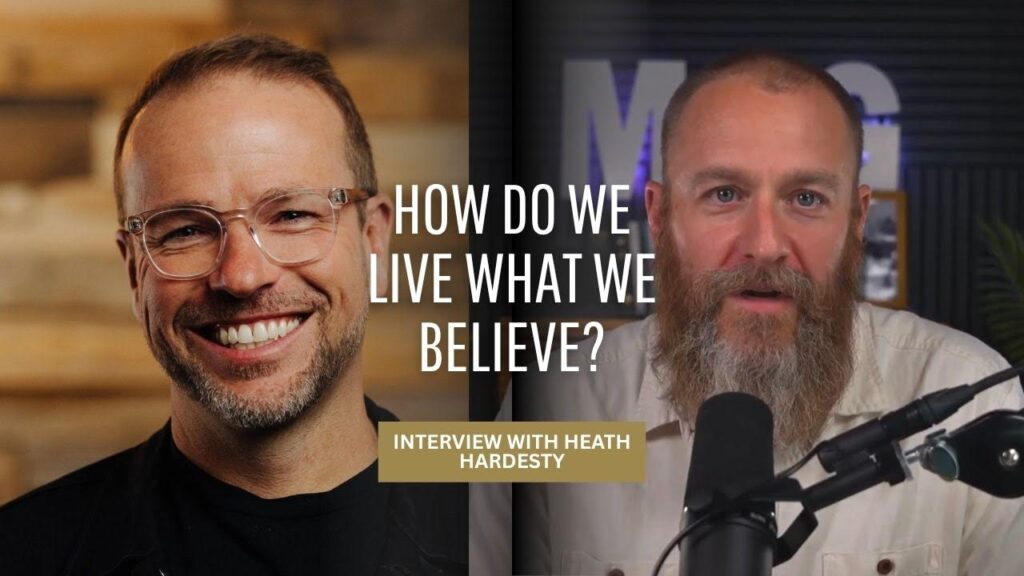
This week, Aaron sat down with Pastor Heath Hardesty. Heath’s story is one of transformation—moving from a plumbing apprenticeship in Colorado to pastoring in California’s Bay Area—and his new book, All Things Together, explores how apprenticeship to Jesus brings wholeness to our fragmented lives.
Heath described our generation as living in “the age of disintegration.” In a world of distraction and digital overload, we’ve become fragmented—splitting our faith from our work, our worship from our daily life. Yet, as Heath put it, “apprenticeship to Jesus is about embodying faith, not just understanding it.”
Apprenticeship to Jesus
The idea comes from Heath’s own experience working under his father as a plumber. Apprenticeship wasn’t just about taking notes; it was about being with the master, learning by doing. He explained that when we follow Jesus, we’re called into that same kind of relationship—one that is relational, hands-on, and transformative.
“There’s no apprenticeship that isn’t relational,” Heath said. “It starts with union, leads to abiding and obeying, and culminates in imaging Christ.”
This kind of discipleship is more than gathering information—it’s about letting our time with Jesus reshape how we live, love, and lead our homes.
Faith in the Everyday
One of the most powerful parts of our conversation was when Heath spoke about how faith must be integrated into every part of life—from parenting to marriage to grief. He shared about the loss of his firstborn son, Haven, and how lament became a sacred expression of faith.
“Lament isn’t a lack of faith,” he said. “It’s bringing your pain to God and trusting Him to bring resurrection through it.”
That kind of honesty reflects the heart of All Things Together—a reminder that Jesus meets us in both the joy and sorrow of life, weaving everything together for good (Romans 8:28).
Seven Practices for Wholeness
In the second half of his book, Heath offers seven spiritual practices for living an integrated life:
- Scriptural meditation – Listening to God’s voice above all others.
- Unceasing prayer – Talking first to God about everything.
- Life together – Living in confession and community.
- Unhurried presence – Slowing down to notice God and one another.
- Joyful generosity – Reflecting God’s giving nature.
- Compassionate gentleness – Using our strength to serve others.
- Faithful witness – Speaking and living out the gospel.
Each of these practices helps realign our hearts to Jesus, our Master, drawing us into unity with Him and each other.
Living Whole Again
In a culture that rewards busyness and self-focus, Heath reminds us that flourishing begins with apprenticeship to Jesus. It’s about being with Him, learning from Him, and allowing His Spirit to shape every part of who we are—our marriages, our parenting, our work, and our worship.
As Colossians 1:17 says, “He is before all things, and in Him all things hold together.” When our faith is integrated into every part of life, that’s exactly what we experience—a life held together in Christ.
READ TRANSCRIPT
Heath Hardesty (00:00)
Everyone wants to label the age we’re in. I call it the age of disintegration. And there’s these six big disintegrations.
Aaron Smith (00:07)
I call it the age of Noah. Yeah.
Heath Hardesty (00:09)
They didn’t know it, there you go.
There’s all these disintegrations that are at play that we need to be conscious of because they’re forming us or deforming
Aaron Smith (00:17)
Welcome back to another episode of the Marriage After God podcast. I’m your host, Aaron Smith. Today I’m thrilled to have Heath Hardesty, lead pastor of Valley Community Church in Pleasanton, California, and author of his new book, All Things Together, on the show. Heath’s unique journey from literature major and plumber’s apprentice in Colorado to pastoring in Silicon Valley helped lead him to a concern over how fragmented Christian faith has become. We talk about his book, All Things Together, how apprenticeship to Jesus is the way of flourishing in a fragmented world.
which weaves scripture, storytelling, and practical wisdom to show how following Jesus integrates our scattered lives, countering digital overwhelm and isolation. We’ll explore how this idea of apprenticeship with Jesus transforms our marriages and parenting, embracing kids as blessings that enhance God’s adventure, practicing unceasing prayer and compassionate gentleness at home, and living out our faithful witness as a family. Whether you’re navigating loss,
large family dynamics or seeking wholeness in Christ. This episode is going to encourage you. Before we jump into it though, I want to invite you as always to hit that like button, subscribe to our show wherever you watch or listen. And also if you’d like to support this show, please visit shop.marraigeftergod.com and pick up a copy of one of our books, either one of our prayer books, our newest book, The Marriage Gift, 365 Prayers for Your Marriage, or you can even get our devotionals, which are currently going
crazy insane on TikTok. So please check those out at shop.mirageaftergod.com. So now please enjoy my conversation with Heath Hardesty.
Aaron Smith (01:50)
Heath artisty welcome to the marriage after God podcast super glad to have you man
Heath Hardesty (01:54)
It’s a joy, Aaron. Thanks for having me on. Looking forward to it.
Aaron Smith (01:58)
So you are currently a pastor and I know that you have you know, the book we’re talk about in a little bit But really I like to talk to the author the person, you know, who is Heath? What’s your background? What’s your story? What’s your marriage testimony? You know, what’s what what where who is Heath so that my audience can go go? I know who that guy is
Heath Hardesty (02:20)
Yeah, yeah, thanks. Well, I was born and raised in Colorado. I live currently in California. I pastor in California in the East Bay area. We’ve been out here for about 15 years. Pastor a church called Valley Community Church here in Pleasanton, California. Before that, though, both my wife and I grew up in Colorado, a town called Longmont.
We both grew up in Christian homes. Just in brief, my story, though I grew up in a Christian home, I grew up going to church.
It was like intellectual furniture for me. It hadn’t entered into my heart. I knew who Jesus was, but I didn’t have this deep-biting love for him. And so he got to me in 2007, and by his grace, just radically changed my life. I had a deep love for him. And so since that point in 2007, God sent me on this wild journey of entering into ministry. Never planned on being
a
pastor at all, but he started directing my course in all these ways that I never would have expected. And long and short of it, I ended up becoming a pastor out here in California and part of this awesome church community here for 15 years.
before pastoring, after university, ⁓ I studied literature in university. I became a plumber because my father was a plumber. So I grew up in a blue collar home. And honestly, I vowed I would never become a plumber. That was not my route. But I ended up doing it for a while. ⁓ At one point, my dad’s like, hey, you went.
you want to marry this incredible woman, ⁓ Marla, and that’s my wife, Marla, and I think you can make a little more money plumbing versus doing what you’re doing and it’ll be good for you. So ⁓ we established my apprenticeship and I became an apprentice plumber to my father and I did that for a number of years and then eventually ⁓ became a pastor out here.
Aaron Smith (04:26)
Mm-hmm.
I just want to say something about plumbing. Me and a bunch of guys meet together on Tuesday mornings for coffee and just to talk life and get in the Bible and pray. But some younger men have started joining and one of them is going to, he’s working towards becoming an apprentice to become a plumber. Like this is whole process, right? Every state has their rules. But anyways, so I was just thinking when you were talking about becoming a plumber, I was thinking about him.
Heath Hardesty (04:36)
Hahaha.
Mm-hmm. Yeah. Right.
Aaron Smith (05:02)
And then I was also thinking about like these trades, plumbing, electrician, lineman, mechanics, all these hands-on blue collar trades, they’re very quickly becoming the most lucrative jobs you can get. Like AI has taken over all these tech jobs that people spend a lot of money getting schooling or getting training in and now almost anyone can do it.
Heath Hardesty (05:16)
Right?
Aaron Smith (05:27)
Not saying there’s anything against those other tech jobs, that’s what I do. It’s like I got my bachelor’s degree and all that, but I’m just realizing like these, who’s the guy that does the dirty jobs show? He’s famous. Micro, yeah, yeah. He’s been saying it for a long time. Like, hey, we need these jobs. People are not going to do it anymore. So anyways, I just wanted to make a little note on, for all my listeners that are trying to figure out if they need to do life career change, plumbing’s not a bad choice.
Heath Hardesty (05:32)
Mm-hmm.
is it Mike Rowe? that his name? Yeah. Yep.
⁓ It’s
Yeah. No,
not at all. I mean, no matter how digital our world gets, it’s still an analog world and people still need hot water and running water and homes to live in. We can’t get away from the analog ultimately. So, yes, the trades are ⁓ incredible. Yeah. And it’s part of the book, but I wish I had a greater appreciation of it while I was doing it ⁓ because there’s a sacredness to it.
Aaron Smith (06:00)
Yeah ⁓
Mm-hmm.
Heath Hardesty (06:21)
to using the raw materials of God’s world to create order out of chaos and to bring good to people. yeah, high respect, high respect for the trades.
Aaron Smith (06:26)
Mm-hmm.
Yeah, well, and they do, they’re lucrative nowadays. These plumbers can start their own businesses and be busy the rest of their life making 150 bucks an hour. It blows my mind. like, maybe I should just stop podcasting and I’m going to go become a plumber or an electrician. I actually don’t know if I have the patience for it because that’s a tedious thing. takes skill to do those jobs.
Heath Hardesty (06:34)
Hahaha.
Yeah.
Yeah,
yeah, lots of learning for sure.
Aaron Smith (06:55)
So how long have you been married?
Heath Hardesty (06:58)
I’ve been married, oh goodness, 19 years now.
Aaron Smith (07:02)
Dang, we’re yeah, my wife and I were coming up 19 year this January will be 19 years for us. So that’s amazing It’s it’s crazy to I mean most of the people I interview they’ve been married quite a while so because believers often have longer marriage lifespans, but it’s just so cool to meet people that are working through and getting past those it’s those early years like you know this and I mean, it’s always there’s always gonna be challenges, but so those early years of just figuring out what marriage is about and
Heath Hardesty (07:24)
Yeah.
Yeah.
Aaron Smith (07:31)
pushing
through it and the hard things and getting to 19 years, that’s incredible. So I just want to say, it’s awesome.
Heath Hardesty (07:35)
Yeah, yeah, oh dude,
dude, we hit 20. I’m thinking 19 because we didn’t do our big 20th celebration and we’re gonna bump that to next year. So I totally apologize. I’m like, oh no, it’s 20 because, no, no, no, keep it, she’ll love it. Because we just had a baby this past year.
Aaron Smith (07:43)
that’s even better!
Do you need me to cut this for your wife, this part out?
Heath Hardesty (07:55)
And so a sweet little baby girl and so the big 20th celebration, we’re like, all right, we’re gonna shift that to next year. So in my brain, I’m thinking 19th to 20 next year. yeah, we hit 20 and God graced us with a sweet baby girl named Ruby this year. ⁓ So we’re like, all right, we’ll 20th celebrate next year. ⁓ congrats,
Aaron Smith (07:55)
dude, that’s also awesome.
Dude, we just had a
Our youngest just turned one last week. yeah, how old are you guys?
Can I ask? Is that okay?
Heath Hardesty (08:22)
Yeah,
yeah, if you want to know how old I am I’m 47. Yeah
Aaron Smith (08:27)
Really?
No. Okay, if you’re listening to this and you can’t see, Heath does not look 47. That just blew my mind.
Heath Hardesty (08:30)
Hahaha
⁓
Thank you. I appreciate that a great deal. I’m feeling it. dude, I’ll take it. That’s amazing.
Aaron Smith (08:36)
Yeah, I was thinking 35 maybe, maybe 40.
Dude, good for you. Do do like
you’re doing anything you like jujitsu or exercise or anything or just lots of greens? What is it?
Heath Hardesty (08:48)
I’m
trying to keep up with all our kids. I am, yes, working out more in the season. I feel like I’m more mentally healthy. My spirit, my soul feels better when my body’s active. So trying to find the time to work out, do it primarily in the evenings. And then, yeah, just staying active with the kids, throwing the football with my son, chasing him around, those kind of things.
Aaron Smith (09:16)
Okay, I’m gonna have to talk kids for a second. How many kids you got?
Heath Hardesty (09:18)
do it. ⁓
So we have five children. Our first born passed away ⁓ the day he was born years ago. His name is Haven. So we have one that’s not with us and then we have four other kiddos who are.
Haven our first born was a boy our second born ⁓ Silas. He’s he’s 12 then we have Hadley and she’s 10 Olivia who’s eight and then Ruby who’s just about nine months now Yeah, yeah ⁓ My answer is kind of funny it’s like kind of you know, we had always hoped that we would have another one and never
Aaron Smith (09:52)
That’s a big gap from the, it was not a surprise, was Ruby a surprise?
Yeah.
Heath Hardesty (10:06)
hey we’re done just because the kids have just been such a blessing they’re such a gift gift to us we didn’t know if we were gonna be a family of you know four or five and so when Ruby came around we’re like well okay I guess I guess it’s five yeah but really uh-huh
Aaron Smith (10:25)
That’s exactly how I would answer you do because my last kind of it was kind of a surprise but it was like
also we weren’t Doing anything to prevent like but we are older our youngest and our second youngest is our biggest gap so she’s five and our ⁓ and our Youngest just turned one. So that for your gap, but you have a think yours a gap is bigger there
Heath Hardesty (10:35)
Yeah
Mm.
wow.
Yeah, you know, and honestly, the gap has been so glorious.
It’s because now all of our kids are aware enough, cognizant enough to know the blessing of the baby. And I love watching my son and daughters see the parenting and like see each step. I’ll come home and they’ll be like, dad, guess what Ruby did? And they’re so excited over every bit of her learning curve. And so we’re seeing the wonder of having a baby through the eyes of the other kids in a different way than we did before, because they’re all two years apart, except for Ruby.
Aaron Smith (10:59)
Yeah.
things that you would have done. ⁓
Heath Hardesty (11:24)
So it’s it’s been been amazing plus we have three kids who are very able to help to hold their sister to you know to take a walk around the house with her to do whatever it is But it’s been a wonderful season man like I’ve enjoyed all of the birth and raising of all our kids But this last one now I feel like my eyes are a little bit more open to the wonder and the beauty of it Maybe it’s because I’m so old now. I don’t know what it is, but I love it old and wise
Aaron Smith (11:30)
Yeah.
Hmm.
Old and wise and
Heath Hardesty (11:54)
Yeah, right
Aaron Smith (11:55)
yeah, that’s exactly what we experienced. I mean, so our kids were a little older when we had, know, five years ago, had Edith, our second youngest, but the ages they’re at now, ⁓ my oldest is turning 13 this year. My second oldest is turning 11 and then eight, turning nine. Like they’re all old enough to the exact same thing. They are all.
participants in raising our daughter and but not like that they’re responsible, but they’re learning the responsibility. They’re, seeing that all those developmental things and get excited about it, which is such a cool thing for them. Um, and because then it, then it makes you wonder like, how do I get my youngest to experience all that? Like, well, I have, do I have to keep having more kids? How does this work? So I guess, yeah, but that, is a such an awesome thing to be able to.
Heath Hardesty (12:42)
to stop at some point, right? ⁓
Aaron Smith (12:50)
see them in a new phase developmentally as my older kids being able to not just take some of the weight of raising a child, like the changing and the watching and those things, but it’s a part of their whole process of becoming adults, becoming moms and dads themselves. They’re seeing this and learning and then they’re seeing from us. also the hard part is they see us when we mess up and they’re like, hey, like you can be a little more patient. We’re like, now you’re like seeing
with discerning eyes get to call us out on when we’re not walking great. But I love that. The reason I’m bringing this up is I love, ⁓ especially in the day we live in when we’re in a population crisis, I never want to advocate just have kids. I believe in what God’s command was, which is be fruitful and multiply. We need fruitfulness, not just multiplication. ⁓ when that fruitfulness is God…
loving, God-knowledge-filled children. And so I just, I like to encourage this journey of parenting for all my listeners because everyone’s on a gamut of decision-making process, how they feel about kids, where they’re with their own kids, the difficulty levels, where the fathers are at, all of the, you name it. But I just, you said blessing and I just want to always reiterate how much a blessing children are. And you just had one at 47, 20 years into marriage.
There had to have been some fears maybe. Was it ⁓ maybe not like I know I was I didn’t respond well when I heard that my wife was pregnant. ⁓ Regretfully it was but that was me walking in my flesh for a moment of like surprise and ⁓ craziness but totally thankful now. But what was your heart’s like in that moment of finding out you’re pregnant.
Heath Hardesty (14:25)
Yeah.
Yeah,
was 46 and then turned 47, just a big difference, Honestly, it was excitement and joy. Then you start to do calculations and things after the fact, but the overall tenor.
Aaron Smith (14:43)
46, okay. There you go, okay.
Yeah.
Heath Hardesty (14:59)
I don’t know why, I think it was just a grace of God in the season. But it was excitement. And then it was adjusting like, oh wow, okay, so what does this mean for the family dynamics, those kind of things. But the overall tenor was excitement. I think if anything regarding age and life stage, it’s like I wanted
Aaron Smith (15:21)
That’s cool.
Heath Hardesty (15:29)
be energetic and I want to be healthy by God’s grace as long as he’ll allow so I can I can keep
caring for my family and be present, not just wiped out, not exhausted. And so I think it made me take a good hard look at my schedule. We had already been sabbathing Friday nights to Saturday nights because I’m a pastor, that’s my day off. ⁓ And so was like, do I do this well so I can be actively present for another kid for the long haul? So it had me. ⁓
Aaron Smith (16:03)
and
Heath Hardesty (16:05)
Look at my energy usage as well as my calendaring and scheduling.
Aaron Smith (16:11)
That’s a good point. The moment we had ours, sixth, you said the calculations. I mean, it was like, so 41 in 10 years, I’m going to be 51. then I’m realizing I’m going to have a 22-year-old, 18-year-old, the whole world’s going to be different in 10 years. But that’s something that I do believe
Heath Hardesty (16:15)
Uh-huh.
Haha, totally. ⁓
Yeah. Yeah.
Aaron Smith (16:40)
There’s when God talks about children being a blessing that he does. He blesses us not just financially, not just physically, not just mentally. Like in every aspect. Again, it’s going to look different in every level because God is working all of us in different ways. But the men I know that have larger families, they they seem like the youngest men I know. ⁓ They’re not. They’re older than me by 10, 15, 20 years, but they have life and energy and they’re an excitement. And it just seems like
There you like you said yourself, you feel really good at this age, almost better than you ever have. And, and I feel like kids do that. It makes you like, especially more kids. And when you get older, you’re like, I have to change my schedule. I have to focus on my time. can’t chase these things that I may have used to want to chase. I have to pull back on these things. I also have to, you know, be wiser and how I’m building our business and finances for our home and managing that.
You know, and also what are we doing with our kids? What time are we investing into them? What places are we visiting? What things are we experiencing as a family so that they have memories and also ⁓ life experience? You just don’t get that without kids. And I’m not trying to put down people that don’t have children because there are some that can’t or have had difficulty. But I know that their hearts often are like, I want children because that’s what God’s put in us. And I just think that’s so
Amazing. that design that God gave us and how families are formed. I think it’s super encouraging that you’re at 47, you just had another baby and that’s incredible. 20 years in, fifth child. I also, if you’re okay with it, I want to say I love that you include your son that you lost because he’s still your son.
Heath Hardesty (18:32)
Yeah, thank you. I appreciate that. And that was a decision that Marla and I came to after losing Haven all those years ago and then having other kids. We wanted to talk about him. ⁓ We wanted his name not to be like a hush or whisper around our home, but something that is just part of our family story. So our kids all know about Haven and sometimes in their
Aaron Smith (18:47)
Over.
Yeah.
Heath Hardesty (19:01)
this sweet, you know, kid-like way, they’ll say, you know, I wonder, I wonder how Haven is, or I wonder what he would think about this. I wonder if he would like Legos like me. I wonder what, and instead of it being a real melancholic thing, it’s a way of honoring. It’s a way of like embracing God’s grace in our life, because God’s grace carried us through those really, really painful times. And not that there’s no sadness, because there is.
Aaron Smith (19:08)
Yeah.
Yeah.
Heath Hardesty (19:31)
but there’s hope, there’s great hope with it. And so yeah, he’s part of our story and our kids will mention the name Haven often.
Aaron Smith (19:40)
We, something we did in our, I used to be a pastor of a home church. just recently, like a few months ago, winded that down for different reasons, but never wanting people to feel like they can’t celebrate or mourn like children they lose, like miscarriages, because those children are children. And it’s one of those hard things about believing that life starts at conception and believing that God knits.
children together in the womb that he wonderfully makes us that every human life has intrinsic value because they’re made in the image of God is we get to we cannot pretend that didn’t happen and it’s okay and good to celebrate and mourn no matter how long that life existed and so we’ve always tried to encourage that which is it’s a hard thing to do as a pastor it’s hard thing to do as a friend like hey we want to mourn with you and
also celebrate that you’re, you know, so we, when we were good, sorry. Yeah.
Heath Hardesty (20:39)
Yeah, absolutely. I was just gonna say lament is
a faithful practice of followers of a good God, you know? And lament doesn’t simply…
you know, just expressing pain, but it’s, there’s an orientation, it’s bringing that to him and expressing the ache and the pain and then asking for him to do something with it, that only he can, you know, to bring restoration, renewal, ultimately resurrection through it and then trust a new, like have a new galvanized hope in him. So like, I’m with you, like, it is good to enter those sayings, not to…
Aaron Smith (21:06)
Yeah.
Yeah.
Heath Hardesty (21:20)
numb them or spiritually bypass them but enter into them and trust God with those tears.
Aaron Smith (21:27)
When you say that there’s something, I don’t want to say like evil, wrong about trying to, like you said, spiritually bypass like, hey, like, hey, God’s got him anyway. And like, you know, maybe this is better. Maybe like those kinds of things that we’ll try and say to ourselves to avoid the pain. And the first thing I think of is like Jesus going to his best friends, like he’s dead and he cries. He weeps.
Heath Hardesty (21:44)
Yeah. Right.
Aaron Smith (21:55)
over the loss of his friend, even though he knows what he’s about to do, what God’s going to do through him and raising him from the dead. But the lamenting that weeping over the loss of someone and also weeping for the pain that the friends and family are feeling, it’s not good to bypass those things. this is funny for me to say because I’m actually, I struggle with emotion in general. I’m a very, I don’t want say melancholy, but what’s it, stoic? I have a hard time with
Heath Hardesty (22:21)
Okay, yeah.
Aaron Smith (22:25)
high degrees of emotion. ⁓ But I also, I know that that’s a ⁓ fault of me. That’s an area that I’m actively asking God to like hone and fix in me because I do need to be able to feel the right things at the right time. so yeah, I just, I appreciate you sharing that about your first son because…
Heath Hardesty (22:36)
Yeah.
Aaron Smith (22:50)
Even though he’s not with us here, he’s still your son. I think when you stand, when you get up into heaven, he’s going to run and he’s going to embrace you guys and you guys are going to know him. And I think that’s amazing.
Heath Hardesty (23:00)
Yeah, well thank you for asking and engaging that and not just letting that slip by. That is honoring and again like we have a faith of incredible hope and I love the realism of the Christian faith, right? It’s not just an open empty tomb which is incredible but there’s a cross and there’s the day of silence and if we went if in somebody’s loss we just quickly get to the cross and don’t the the tomb excuse me and don’t acknowledge
Aaron Smith (23:14)
Mm-hmm.
Heath Hardesty (23:30)
the
tears at the cross or the darkness of Saturday, we can trivialize what they’re experiencing. And so our faith is a fully fleshed faith, full of tears and joy. So to enter into it with them and the power of presence is being with somebody like in that versus offering just, because we wanna say something, right? We wanna make somebody feel good and we wanna help, we wanna care for them, but often those good intentions
Aaron Smith (23:42)
and
Mm-hmm.
Yeah.
Heath Hardesty (24:00)
can come out in ways that can trivialize or cause pain. It’s just the power of presence, being with people, weeping with them is so important.
Aaron Smith (24:10)
That’s something I can do. I could be with someone in the midst of, but I don’t know how to engage with the emotions of it. So, somebody could pray for me actually. ⁓ We have some friends going through some pretty ⁓ painful, terrible stuff and we pray for them. And I offer them like, can I come and be there with you? also I’m terrified in my heart of being in the midst of it because I don’t know how to…
Heath Hardesty (24:12)
Yeah.
Hmm, yeah. Yeah, I appreciate you sharing that,
Aaron Smith (24:39)
you know, handle that stuff. ⁓ So pain and death and sin, all these things that are very painful. ⁓ But this is a great transition into all things together. Your book you wrote, ⁓ and it’s essentially on this idea of a fully integrated faith. that correct? Is that a good assessment of the direction of the book?
Heath Hardesty (25:03)
Yeah, yeah, the project is a very integrative project, bringing together the pieces of our world, the pieces of our faith, and how it’s apprenticeship to Jesus, union with this Jesus that ultimately leads to flourishing in a fragmented world, which is basically the subtitle of the book, yeah.
Aaron Smith (25:18)
Mm.
Yeah.
So what led you to your, so you were a plumber’s apprentice. Was that your first main like career path? Plumbing? Yeah.
Heath Hardesty (25:33)
⁓ Essentially, you know, I had
a number of odd jobs growing up, you know. ⁓ Yeah, just a number of them. But out of college, you I was working at a bookstore. ⁓ Back then it was called, well, Borders was a bookstore before it ended up closing.
Aaron Smith (25:49)
yeah.
Heath Hardesty (25:50)
I was doing music. was playing. Yeah, yeah, I spent a lot of time at Borders before I worked there, because I’m a book nerd. I was a literature major. Just give me stories all day long. I love it. So I worked there for a while while I was pursuing music, recording artists, recording my own band, playing, all those things. ⁓ But then, yes, then I stepped into plumbing and then five years in the plumbing trade and then stepped into pastoring.
Aaron Smith (25:52)
Remember, Borders.
So you’re a very creative person. You can tell in the writing style of your book that you love books and you love reading and you love literature because it’s not like when I write a book, it’s very sterile. My wife has to come in and add color to it and yours is very colorful and very interesting to read. It’s very engaging. So just want to point that out because that’s a unique thing in a book like this.
Heath Hardesty (26:44)
⁓ Thank you. Well,
that’s part of the integration. I want to bring together the good, the beautiful and the true. So there’s an aesthetic dimension to the book, to the prose that was trying to embody what the content was communicating. So, ⁓ man, and I love poetry. I love good turns of phrases and well-worded sentences. So the hope was that there would be a beauty ⁓ in the form itself that would…
Aaron Smith (27:03)
Mm-hmm.
Heath Hardesty (27:11)
just communicate the heart of the message as well.
Aaron Smith (27:14)
Something you just made me think of is how the Bible’s written. It’s not just a sterile story. Here’s what happened. Here’s what happened. There is that. Like that stuff is there. ⁓ The harder things to read in the Bible are the like in so and so we got so and so we got so and so. And then you have tons of ⁓ poetry and you have tons of, ⁓ you know, proverb and these different writing styles. And it’s not just a singular, which shows the
Heath Hardesty (27:23)
Yeah.
Yeah.
Aaron Smith (27:43)
the beauty of how God created the world. understands how the different personality types and the different, you know, natures that we have. And ⁓ it just plays out in his word, which is so cool. First of all, have you ever read a book called The Word of God in English by think Leland Reichen?
Heath Hardesty (28:02)
No, I mean I love Raikin, ⁓
Aaron Smith (28:05)
Really? he’s
a literary ⁓ professor, I believe. I think that’s what he is. ⁓ And he writes a book on the beauty of the Word of God and how it’s written. So he’s not coming at it like commentary or saying this Bible is better than that Bible. Although he talks about the different… It’s one of my favorite books on this topic is about the different ⁓ schools of thought on translation.
Heath Hardesty (28:17)
awesome.
Okay. Yeah.
Aaron Smith (28:33)
you know, dynamic equivalence versus
essentially literal and showing the power of one over the other and why we should lean towards essentially literal rather than dynamic equivalence. But he just he talks about the beauty of the King James Version and not that he’s saying it’s the only one we should read. He tends to push people towards ESV, but that made me fall in love with just the literature of the Word of God. Like when I read it, I’m like, oh, this is like just fun to read.
Like it’s written so beautifully, like the poetry and the artistry. So I just brought that up because you did that with your book. It’s not just a book that was like, here’s some ideas and here’s a story. You wrote it in a very ⁓ poetic and creative way. And I just think it’s worth noting because I’m sure there’s a lot of my listeners that love reading interesting books and this is one of those.
Heath Hardesty (29:29)
Well, thanks. Thank you for that. And my hope is to really engage the imagination, right? Not just to transfer some data about theology, but to really engage the information or the imagination and let information be a part of that. ⁓ yeah, thanks for saying that. That makes me quite happy. ⁓
Aaron Smith (29:48)
Hmm.
Yeah.
So what led you to want to write a book on this subject of integration and all things together? And I know we keep saying the word integration and I’m pretty sure people have all sorts of definitions of what we’re talking about. You’re talking about a life that is not segmented in sense of like, I have my faith life over here and like on Sundays and on Wednesdays.
Heath Hardesty (30:05)
Right.
Aaron Smith (30:17)
I’m Christian over here, but then over here I’m a plumber or I’m ⁓ executive or and then I have my job over here. And then over here I have my hobbies and everything’s like separated and nothing’s whole. Nothing’s integrated. That’s what you mean by integration is our faith being fully integrated into every aspect of our life. Would you like to dig into like what drew you to this topic?
Heath Hardesty (30:41)
Yeah, yeah, absolutely. So after stepping into the pastorate and being a green pastor, trying to figure out how to care for a community, and then over the last 15 years, seeing that so many people struggle with ⁓ having bits and pieces of an understanding of what does it mean to follow Jesus, but not having a storied, and again,
these
word integrated or holistic understanding or imagination of how it all fits together. It just kind of leaves us juggling a lot of bits and pieces. And so what my hope was, was to try to find a way to bring together, to hold intention, all these beautiful facets and pieces of what does it mean to be a follower Jesus, communicate it in a very ⁓ coherent and accessible way that does connect with goodness, beauty and truth.
to help people make sense of the varied experiences of this world and what does it mean to follow Jesus. thinking about my own journey as an apprentice plumber, as a follower of Jesus growing in this process of sanctification.
I just really wanted to pull together something that was helpful for any individual, whether they’re a Christian or they’re exploring Christianity. Like, what does this actually mean to follow Jesus above and beyond getting some data or some doctrine ⁓ in the head? And how do we walk this out as fully embodied beings? And so that led ultimately to the writing of this book. This is stuff that we’ve been exploring at our church for a number of years.
It’s embedded in the bloodstream of our church family here, teach a class on it. And so it just made sense to put it into an artifact, so to speak, and ⁓ flesh it out that way.
Aaron Smith (32:42)
So the all things together, which sounds like it’s coming from the scripture, you God works all things together for good for those who love and are called according to his purpose. ⁓ But the apprenticing part comes from your plumbing background as an apprentice plumber. Did you ever make it to full on plumber?
Heath Hardesty (33:02)
No, you know, ultimately it goes apprentice and then journeyman and then master. So I remained in the apprentice category because ultimately we knew I was going to step into something else, although we didn’t know what it was. So, no, in that category, I’m still an apprentice. And I will always be. Yeah. So no master plumber here. That’s my dad.
Aaron Smith (33:20)
Aren’t we all right? all apprentices. You use that
life story as an illustration for this concept. What is, you know, a lot of people are going to say, you know, like, yeah, I’m going to follow Jesus. You know, I love Jesus. I love the Bible and I go to church, but maybe I don’t feel like an apprentice. Like what is unique about an apprentice? That wording.
Heath Hardesty (33:33)
Yeah.
Aaron Smith (33:47)
and how it encompasses what you’re talking about.
Heath Hardesty (33:50)
Yeah, absolutely. Thank you. So, a couple pieces on that. First, I love the word disciple. It’s a biblical word. That word comes from the Greek word methetes, which just means a learner. And so, there’s nothing wrong with the word disciple. So, I’m not like eschewing the word disciple and like trying to come up with something cool out of my own. Yes, that’s right. That’s…
Aaron Smith (33:57)
Yeah.
A discipling isn’t a word. ⁓
Heath Hardesty (34:14)
That’s
right. So we’re to be learners. But the problem is in the Western evangelical context, unfortunately, what’s often happened with that word is it’s suffered from reductionism and it’s been reduced to like, I’m gathering more mental knowledge, right? So to be discipled or, you know, going through a process of discipleship usually primarily in the West means like just more Bible studies. And I’m all for studying the Bible.
more theology and trust me, I’m for theology. But what I love about the word apprenticeship is the connotation of it is more bodily. I just asked a class this last night that I was teaching. said, so when you think about an apprentice ⁓ painter or a carpenter, what do you think they’re doing? And someone’s like, well, they’re painting or they’re nailing the studs. There is a use of their entire
Aaron Smith (34:44)
Yeah.
Mm-hmm.
Heath Hardesty (35:14)
being their body in it. They’re not just taking notes and watching lectures on painting, right? They’re actually then walking that out. So there is the mental component, but there’s also the getting it into your, your myelin sheathing, right? Into your, your muscle memory and your nervous system. So when I was with my dad as a plumber, and this goes into the paradigm that’s at the heart of the book.
I was with him. just say it this way, there’s no apprenticeship ⁓ that is not relational. Apprenticeship is always relational. There’s always a orienting relationship. And so for me, that orienting relationship was ⁓ not only was he my dad, now he’s gonna be the master plumber and I’m going to be the student. So that’s the union. I’m united to him as an apprentice to the master. Then what that union led to,
Aaron Smith (35:49)
Exactly.
Heath Hardesty (36:09)
was a whole new way of being because now my days were being being with the master plumber in bathrooms and crawl spaces and vaults and on the plumbing truck having dialogue watching the master plumber that’s abiding so union leads to abiding and obeying and that abiding with him ultimately led to obeying right because my job wasn’t just to be a voyeur and watch him fix pipes like my job was to not only go get tools and and do all that stuff and be a gopher ⁓
Aaron Smith (36:34)
Yeah.
Heath Hardesty (36:39)
but it was to hold the oxy-acetylene torch in my hand and then solder those pipes as well and have him teach me and train me and get into my clumsy thumbs the muscle memory of a skilled plumber. And then ultimately that abiding and obeying leads to imaging that then I would begin to look more and more like the master. And so, yeah, exactly.
Aaron Smith (37:02)
That’s multiplication.
Heath Hardesty (37:05)
Exactly. And so that’s the paradigm in short. And that’s what really hit me a few years ago when I was actually under a sink. I found myself laughing. This is a chapter in the book. I was laughing because I’m reworking a bathroom in the home that we bought and I’m putting on a faucet. And I start laughing because I’m like, my goodness, I’ve become my dad. Or other words, like I’ve become like my dad. Ten years removed from plumbing. I’m hundreds of miles away from him, but I’m
Aaron Smith (37:31)
Yeah.
Heath Hardesty (37:35)
I’m using the same kind of crescent wrench. I painted it bright fluorescent orange like he used to so he wouldn’t lose it in ditches or crawl spaces. And I’m torquing the wrench the way I saw him do it. And I’m like, it’s got in me because of the abiding and obeying because of that orienting relationship. that’s, dude, that is the paradigm. It doesn’t matter if you’re a plumber now or a stonemason, you 2000 years ago or a day trader, you know, 20 years from now. That is the
essence of apprenticeship, an orienting relationship that leads to abiding and obeying that culminates in imaging. And this is at the heart of the Christian faith. This isn’t some add on. This isn’t some like tack on because of the rabbinical schools, you know, in Israel or what the Greeks were doing with their academic, academic philosophical endeavors. This is at the heart of reality. Human beings are made to be in an orienting relationship with their eternal God.
to abide with him, to be with him, to delight in him, to converse and engage. Then we’re called to obey, to live in accordance with reality, to live wisely in his world. And then as Paul says, like to be conformed into the image of Christ from one degree of glory to the next. So this is the heart of our faith. And that’s one thing I want to put forward in this book. I think one of the key reasons I wrote it is it’s not extra credit. Apprenticeship to Jesus isn’t like ⁓ super Christianity
Aaron Smith (38:44)
Yeah.
Heath Hardesty (39:05)
It’s not like Christianity for overachievers or those who want like, you know, some extra, you know, credit. This is basic Christianity.
Aaron Smith (39:05)
Yeah.
Well, so I like that you distinguish between discipleship because the word still means what it means, but we’ve reduced it down quite a bit just in general of how we perceive it. And it sounds like it’s a big difference between like, here’s some ways to live, but it doesn’t mean you have to versus actually follow me and live this way. Like do what I do. where do you think this
Heath Hardesty (39:38)
Yes.
Aaron Smith (39:45)
Because it used to be this way. Like in the Old Testament and in many countries still to this day, you have children. And going back to the children conversation, that it was just known that the sons went with the father. Like, well, no, you’re not going get… At some point, they stop running around and playing and they leave their mom’s side and they’re going to walk with their dad out to the field or to the pasture, to the wherever. And that’s where they’re at all day with their dad doing what he does.
so that they can continue to do that for the family or their family in the future. And then the daughters follow the mother and learn what the mother does. like apprenticeship, like you said, it wasn’t an idea that was developed by the Greeks. Like this is just the way of life. Adam’s kids did it with Adam when he was teaching them to plow the field that now had lords. And he’s like, it used to not be this hard kids. But you’re right, the apprenticeship, it…
Heath Hardesty (40:27)
Right. Yep.
Ha ha ha.
Aaron Smith (40:41)
Encompasses a lot more of the understanding of what discipleship is It’s what the disciples did with Jesus walking with him for three years and he’s like have you not been with me for so long? You don’t you saw the five thousand get fed. You saw me raise Lazarus from the dead. What’s going on? But where do you where where did we as believers? Where would you say in all of this writing and all this research you were doing on this this subject? When did the veering away from?
Heath Hardesty (40:56)
Right?
Aaron Smith (41:11)
the reality of discipleship change. When did that reduction happen that led us to a place of lots of isolation, lots of fragmented, you know, Christianity where believers are, they’re not fully all in. see Christianity as just a part of their life, not the definition of their life.
Heath Hardesty (41:34)
Man, that is a really, really good question that could go a number of ways. I mean, if I wanna go like big picture philosophical schema, you you go back to enlightenment thought that started to see the world as kind of like a clock and with its pieces and with its gears. ⁓
And then there’s, you could go back to even Descartes, you know, and the mind-body dualism and this fragmentation of us instead of being holistic beings, it’s like, no, I’m a mind and the real me is this inner part because there’s this dualism between the body and the mind. And then ⁓ over time, that I think what’s happened to really move forward in a big sweep is it’s
led to a cultural way of being that’s been called expressive individualism. ⁓ did you?
Aaron Smith (42:34)
Yeah, we just talked about this with a couple of pastors a
few interviews ago. Express individualism.
Heath Hardesty (42:40)
So I think that’s
a piece of it is that over time, whether if you want to chart it from like Rousseau to the Romantics to the masters of suspicion to the philosophers of the 20th century down into the artists, and then it goes to Robert Bella who coins the term.
And then Charles Taylor, who’s a Canadian philosopher who really gets into it. And basically the heart of it is it’s the self, the inner self is the authority, you know, and we’re finding that authentic identity and then we’re expressing ourself. I think all of that is showing how fragmented we see the world. And that’s really seeped into our understandings of the church. And then that belief is some kind of like hidden inner compartment within us versus
What we do with our body because that’s what trust is right and we’re going to trust him with the entirety of our being It’s not just some weird little floaty ghost in the machine that we call belief or faith so I think we’ve often bought into the reductionism that that our culture has has ⁓ Put forward and I think that’s just the nature of sin like sin fragments, Sin takes Shalom God’s active piece designed for mutual flourishing and it shatters it and and it breaks it into
Aaron Smith (43:55)
Yeah.
Heath Hardesty (43:59)
pieces and more pieces and more pieces. So we’re just in our little identity groups. ⁓ And so yeah, I think it’s partly just the sheer nature of sin, know, careening through time and space since chapter three of Genesis. But there’s also this unique cultural moment that we find ourselves in that is a unique amplifier of that sin that’s been there and turns it up.
up to 11 and creates an echo chamber of further fragmentation.
Aaron Smith (44:31)
Wow. I just read to my kids ⁓ Proverbs 18 this morning and Proverbs 18.1 is a ⁓ fool separates himself, know, isolates himself, it says actually, and goes out against all sound judgment. I think you nailed it with the sin aspect because it’s on the big picture side, we can try and look at all these like things that ideas and theologies over the years that have led to this idea of
Heath Hardesty (44:39)
huh.
Aaron Smith (44:58)
Well, I’m going to just separate my whole life into all these different compartments to keep them separate and not to touch each other. Separation of church and state and the government. you have the church wanting to avoid certain topics because they just want to talk about the gospel. then everyone’s like, OK, so I’m going to have to go somewhere else to get that conversation. Then I’m going to go over here to social media and talk to so and so. But I think bullying it down to it’s essentially, we’re constantly looking for
people to tickle our ears. The sin in us wants to avoid the wholeness and the peace of God and the truth to gratify its own desires. And that sin which leads to shame and hiding is how we fragment. need to keep being this thing over here and I’m going to hide that part of me over there. That is the essence of fragmentation. ⁓ And I think about ⁓ a long time ago, the Bible Project did a series on
Genesis and it was the first time I ever heard this and it said that Adam became a living soul, you know, when God breathed into him the breath of life. Yeah and he said he’s like we don’t have a soul we are a soul. And that was the first time I ever realized that and I was like ⁓ it’s why it matters how we use our bodies. It’s why it matters how we use our eyes.
Heath Hardesty (46:09)
Yeah, the Nephash.
Yes, 100%. Yes.
Aaron Smith (46:27)
and our tongues and
our ears, not because what comes into us, you know, like the things externally are what corrupt us, it’s what comes out of us, what we’re filling ourselves with and what comes out of us. And we see that throughout scripture with the warnings we have of like, you know, if you’re going to put yourself with a prostitute, you’re putting Christ with a prostitute. That’s why it matters, the things that we choose to do with our flesh, is because we aren’t segmented.
Like, would you say that’s true? Like, we may think we are or we may try to segment everything, but we are not segmented. In reality, everything is integrated, whether we like it or not. Is that where you go with the book?
Heath Hardesty (46:58)
Yeah.
Yes,
that’s absolutely, I try to include all those things you just said. there’s a part where I talk about six cultural disintegrations. Everyone wants to label the age we’re in. I call it the age of disintegration. And there’s these six big disintegrations.
Aaron Smith (47:26)
I call it the age of Noah. Yeah. ⁓
Heath Hardesty (47:27)
They didn’t know it, there you go. ⁓
There’s all these disintegrations that are at play that we need to be conscious of because they’re forming us or deforming us. if they’re not brought into our conscious awareness, they’re going to continue to work on us. So I try to like do some cultural analysis, bring those into the light and show how apprenticeship to Jesus leads us into wholeness versus being torn apart.
Aaron Smith (47:37)
Yeah.
Heath Hardesty (47:52)
And so there’s like, we live in a disenchanted world, like we separated, we’ve pulled away from God. So that key union that makes us whole is broken apart through sin, right? That’s a riven of the world. And so now people think, well, it’s a disenchanted world, there is no God. Well, that’s highly problematic if the one who holds the universe together and the one who holds you together is like exercised from your world, it’s gonna create this.
Aaron Smith (47:57)
you
Heath Hardesty (48:21)
disenchanted world where we’re struggling for meaning and we’re struggling for transcendence because we’re wired for those things but there’s no source for those so that a disenchanted world leads to a dissociated experience like we’re broken in and of ourselves right we’re feeling the four fractures of the fall the fracture from god ⁓ the fracture with others you know the fractured self because we can’t we cannot be at ease in our own skin and rebellion against the god who’s made us
and then a fracture with creation and how we engage with creation. And then all that leads to a world that’s highly discontextualized. We live in a world that takes the bits and pieces and doesn’t just decontextualize them, like taking them out of where they belong. It discontextualizes them and puts things together that should not be together. So like think of your media feed, right? So a media feed can include like…
Aaron Smith (49:09)
Yeah.
Heath Hardesty (49:15)
⁓ There’s pictures of Disneyland, friends eating some fancy looking meal that they took a picture of their plate, an ad for Nikes, and then a pornographic image, and then right next to that, a verse from Lamentations, and then the next image, dust and blood and concrete in Gaza. Like these things are stitched together like in unholy ways, and they’re catechizing us or teaching us to engage the world in a fractured way. And ⁓ in plumbing terms,
Aaron Smith (49:21)
And.
Mm.
Heath Hardesty (49:45)
You never mix ⁓ clean water and gray water, right? That’s bad. I mean, you keep those systems separate. But ideologically, I should say theologically or sociologically, we’re mixing that stuff all the time and ingesting it. And it’s forming how we engage the world in incongruent and ⁓ broken ways. ⁓ So I could go on with that, but we’re also living in a dislocated age, a disembodied age, like you were talking about.
where the ideological understandings of what does it mean to be human ⁓ say, we have a body to use, but we are not a body for a sacred, meaningful purpose. And so the body becomes like biological plastic because the real me is inside. This is just to do whatever I want. So if I want to reorganize it, change it, ⁓ then I can do whatever I want, which creates all sorts of issues.
Aaron Smith (50:29)
Yeah.
Heath Hardesty (50:41)
because we don’t see the body as sacred and ultimately used for the glory of God and expressing what the gospel is.
Aaron Smith (50:45)
Is that called it
is that idea called aestheticism is that what that is Yeah, there was there’s a term for that where it’s like, ⁓ my spirit is over here But my body it doesn’t affect anything. It’s like it’s something
Heath Hardesty (50:52)
Aestheticism?
Yeah, asceticism can certainly be a part of that where it’s like, I’m gonna deny my body in every way, shape and form. But the reality is our faith is, it’s so earthy ⁓ and God’s given us a body and it’s not like we’re just gonna get rid of this and someday we’re gonna be floating in some like pristine state. Exactly. Yeah.
Aaron Smith (51:07)
Yeah, as a final
Yeah. No, he says he’s going to give us a new body even. Like, he’s not going to give us nothing. He’s replacing
the one that we have with a better one.
Heath Hardesty (51:28)
And the greatest
honoring of the body is the fact that the Son of God was incarnate. Jesus took on a body and then he didn’t like get rid of it like dirty work clothes when he was done and ascended. He has a heavenly body. is fully God and fully man and rules and reigns with that resurrected body. So our faith deeply, deeply honors the unity and the sanctity of the bodies he’s given us.
Aaron Smith (51:44)
Yeah.
Okay, weird tangent for a second. Well, you talked about Jesus’ body and that he put on flesh, you know. This is a theory I have, and so don’t want to say like this is the truth, but I think it’s true. think it’s true. My kids, I mean, they ask the best questions and it makes me think about things that I’ve never thought about before. And they’re like, well, why did Jesus make us look like we do? Like hands ahead, feet, like we look like a
Heath Hardesty (51:57)
Ha
Yeah.
Aaron Smith (52:24)
humans because God designed us to look like the way we do and we’re made in his image and then Jesus came like us, right, in the form of sinful man, not a sinful man, but in the form of one. ⁓ And my theory on this and it’s just a weird tangent, but I actually believe this is what Jesus looked like. Like he didn’t like invent the idea and then become to come to look like a man. I think we look like this because this is what Jesus, like as a man, like this is what he looks like. So,
That’s my theory on that. ⁓ But you’re right. Of his, of pre-incarnate Christ, his form. Yeah.
Heath Hardesty (52:54)
⁓ So that our form is an echo of the pre-incarnate. So instead of him taking
on our form ultimately like we were created in his image in that structural way. Fascinating. I think I need to take a long walk and process that.
Aaron Smith (53:07)
We are taking on his for, yeah.
Yeah, I mean, I don’t know
what it is. I don’t even know if it has any effect on anything at all. But like in the quick, the big questions of like, why I think like, oh, maybe like we are actually in his image, like men and women look like men and women because that’s what Christ is. He’s a man. You know, he has two arms, two feet, and those were nailed, were nailed to a cross. And so and it’s also interesting, also just another side note that everything in creation
Heath Hardesty (53:31)
Yeah, that’s awesome.
Aaron Smith (53:44)
fits into how humans work, which is like, you know, tools work because we have hands and the way they work and feet and moving and I don’t know, big picture things, but I love what you’re talking about with the current culture we have and the amplification of social media and I never thought about it that way, but that’s exactly right. This weird stitching of, even without even asking, it’s not like…
You have to search for this stuff. You’re just being shown it and you’re wanting it. You’re like, just show me things that’s going to engage me. But it’s stitching together all this stuff in different areas of life that some of it you should never or would never look for. And then it’s just shown to you. And then other things that need to be in a different context, you know, a different situation. And ⁓ so I want to take a moment as we come to a close here to talk about practical. We talked about a lot of big stuff.
Big ideas. And I could just imagine, I feel it myself, it’s like, okay, cool. We’re all fragmented. Apprenticing with Jesus. Everyone’s got their words they want to use on how to follow Jesus and what does that look like? And I just would like to talk about the husband and wife, because this fragmentation you’re talking about, this happens in marriage also. You have the wife that has her own spiritual walk and she’s got her own people that she looks to for spiritual guidance.
Maybe they don’t even go to the same church sometimes that that happens or maybe one goes to church and the other one does not or one goes and reluctantly. ⁓ They have different fragmented views on raising their children or on having children. have fragmented views on everything. Maybe even theology. These are all real things that marriages deal with. What are some practicals on
Apprenticing with Jesus that these husbands these wives can take a good look at their life and marriage and say, okay Like the goal the goal like the fruit of doing this is going to be stronger more powerful more Authoritative more useful marriages like for the kingdom of God More happy more happiness more joy more peace that that that’s a fruit of doing this But what is the doing this?
Heath Hardesty (56:01)
Yeah.
That’s a great question. So the book is divided into two parts, part one and part two. And the first part is about reimagining the world, restoring the world, re-seeing the world. But then the second part is re-inhabiting the world. Because we change through the dynamics of like, we become like what we behold, what we look at, how we understand the world. But then also our behavior
is our becoming, like our actions, our habits. We’re not just doing things. Those things are doing things to us. So what does it look like to actually abide and obey, right? To your point, like what’s the turf level of the practical stuff? So the second half of the book goes through seven, what I would consider crucial key practices. And for me, if these aren’t happening in a marriage, if they’re not happening and being seen by the children, there is going to be ⁓ severe fragmentation with the family.
So the first one is scriptural meditation and that’s simply listening to God’s word above all other voices. Like there are a thousand narratives out there clamoring for our attention in this attention economy. And the first voice that we need to hear that makes sense, that brings clarity to the confusion, that holds it together is the voice of God. And so we need to be meditating on the scriptures and understanding how the scriptures
are
the God-breathed, humanity-pinned, story-shaped library that leads us to Jesus. So that’s absolutely crucial. He’s spoken first to us. He created the world, so He’s first in that sense. He’s revealed Himself. He’s first in that sense. His grace reaches out to us. We are to respond, to hear His voice and live in light of it. So that’s the first one. Second one is unceasing prayer. Our marriage needs to have unceasing
prayer right at the center of it. Unceasing prayer, way I define it is talking first the most to God about everything. So this is literally like breathing as you walk through the day, you are just in constant communion with him. And the more you’re in communion with him at the center, the more you’re going to be able to have true deep fellowship with your spouse. It’s that whole triangle thing, right? The closer you are to him with each, the closer you are both
Aaron Smith (58:28)
Yeah.
Heath Hardesty (58:31)
of you to him the closer you are to to each other so that’s right there at the center
Aaron Smith (58:34)
Yeah, well, and the truth
of that is true for marriage also, the more you communicate, the more you’re walking with each other, the more you’re studying each other. You have the exact same fruit.
Heath Hardesty (58:45)
Yeah, and the more you’re in true fellowship with God and he’s revealing to you your own need and your own brokenness, a corollary with that should be humility and being able to say you’re sorry or I was wrong and I still need to grow in this area and the Lord’s working on me, will you forgive me? And it’s that kind of stuff that will bring you into greater intimacy and alignment. So those are the first two practices. I’ll keep it short with
number of others. Life together is simply the practice of living in a confessing community of being known and knowing each other. So that’s meant to talk about the church, but that’s also family. Like, if I don’t let myself be known by my wife and she doesn’t let herself be known to me, and if we’re not confessing Jesus the Savior and confessing our sins to one another, we’re gonna live in alienation and exile from one another. So that’s absolutely key. ⁓
Aaron Smith (59:27)
Yeah. Yep.
Heath Hardesty (59:43)
Unhurried presence is the next one. And man, if you’re not in unhurried presence with each other, you’re going to be missing each other all over the place because you’re just rushing and doing and you’re not being present to God’s presence in your life. ⁓
Aaron Smith (59:56)
Yeah, that’s a really good one. It’s a really good one. But not no. Yeah.
Unhurried presence. I like that.
Heath Hardesty (1:00:05)
Yeah, if your home is frantic, if your relationship is frantic ⁓ and your kids see that there’s no time for spousal love and care, they’re gonna pick up on that. And then they’re gonna echo that, they’re gonna multiply that. But if they see, man, ⁓ mom showed complete like non-anxious presence in that crisis or dad was here and he was.
was present and he tended to mom and cared for her when she was struggling like that ministers to them in ways that are that are so beyond what my words can capture because it right ⁓ wisdom is not just taught it’s it’s caught and so they’re gonna see that lived out and that’s gonna just carry great weight ⁓ a few others to practice our joyful generosity like we’re made in the image of the most joyful glad being in all existence and we’re to carry our father’s yeah
Aaron Smith (1:00:58)
And most generous giver.
Heath Hardesty (1:01:01)
He’s
the generous giver. So if our kids are seeing stingy parents, yet preaching a generous giver, there’s going to be a lot of dissonance and disconnect. So ⁓ we should gladly give away to others what God has gladly given to us. And then this one’s huge, man. And it might sound weird to some people that this is in a list of practices, but compassionate gentleness, compassionate gentleness. ⁓
Aaron Smith (1:01:17)
you
Heath Hardesty (1:01:30)
So what that is, is stewarding our power for the good of others at cost to the self. Because gentleness is not simply being mousy or like quiet or only saying nice things or not being bold or brash. Gentleness is about stewarding power for the good of others. Jesus was gentle. Yes, he flipped tables. Yes, he called people broods of vipers and he called out, know, woe to you, Betzeda, and Corazon. But then he reveals his heart.
Aaron Smith (1:01:56)
Yeah.
Heath Hardesty (1:01:59)
gentle and lowly in heart.
Aaron Smith (1:02:00)
Yeah.
And then he met, meets privately with one of those same leaders, know, Nicodemus, in the evening to answer his questions and to preach to him. And you’re right, you see that gentleness and meekness. That’s the word that the Bible uses, meek, right? It’s strength under control. It’s, yeah.
Heath Hardesty (1:02:17)
Yes, Mm-hmm.
Yeah, so it’s not the opposite of power. It’s the proper use of power. And if you don’t have the proper use of power in your marriage, in your home, ⁓ you end up becoming abusive with power. So to tend to the heart of your wife or your husband, ⁓ you need compassionate gentleness. You need to see from their vantage point engage.
I use your power well. I love how Dallas Willard talks about the practice of not having to have the last word and be like dominating and like crush. Like just what if you don’t have to have the last word on everything? But what if you trust God with what you said and let him do the ministry in someone’s heart? And then that’ll minister to your kids when you show compassionate gentleness. And then lastly, ⁓ faithful witness, our words and deeds should be linked. We should not only… ⁓
walk the way of Jesus, but we should tell people about him, that the gospel is news that needs to be shared. can’t just be intuited by like, you know, looking at the sky. We need to speak the good news about what he’s done and let our families see us unashamedly talking about King Jesus.
Aaron Smith (1:03:26)
Yeah.
Amen. Heath, that was a really good conversation. And also those seven practices, you’re dead on. I love those. I’m convicted by a few personally. So I really appreciate that. ⁓ Heath, where can everyone get your book? Say the name of the book again.
Heath Hardesty (1:03:52)
Yeah, it’s called All Things Together, How Apprenticeship to Jesus is a way of flourishing in a fragmented world. It’s coming out through ⁓ Multnomah. It launches October 14th. You can get it, you know, the whole tagline wherever books are sold. So Amazon, Barnes & Noble, Target, Walmart, the whole deal. ⁓ I have a website that you could go to that connects you to all those places. So it’s just heathhartesty.com or heathhartesty.org.
Both will get you there. Yeah, so wherever books are sold, if you pre-order it now, there’s some extra goodies that are attached to the pre-order. ⁓ But yeah, thank you for any of those who end up checking it out. Appreciate it.
Aaron Smith (1:04:36)
Heath, I really appreciate it. I’ll make sure to put those links in the show notes and I just pray that God blesses you and your ministry and what you’re doing and thank you for continuing to draw people to Christ. That’s what we’re here for,
Heath Hardesty (1:04:46)
That’s right. Aaron, thank you. It’s been a total joy, man. It’s been a pleasure.
Aaron Smith (1:04:51)
Awesome, I appreciate that. God bless you, man. Thank you.
Heath Hardesty (1:04:54)
All right, God bless.